
The global forex market operates continuously across three major trading sessions: the London session, the US (New York) session, and the Asian (Tokyo) session. Each session reflects the activity of its respective financial centers and exhibits distinct characteristics that traders can leverage to optimize strategy execution.
Despite forex being the most liquid financial market globally, volatility is not constant throughout the day. Certain periods experience heightened activity and price movement, while others remain relatively subdued. Understanding these session-based dynamics is essential for improving timing, execution, and overall trading consistency.
This section provides a structured overview of each trading session, including their unique traits, time zones, and strategic implications.
What Are the Main Forex Trading Sessions?
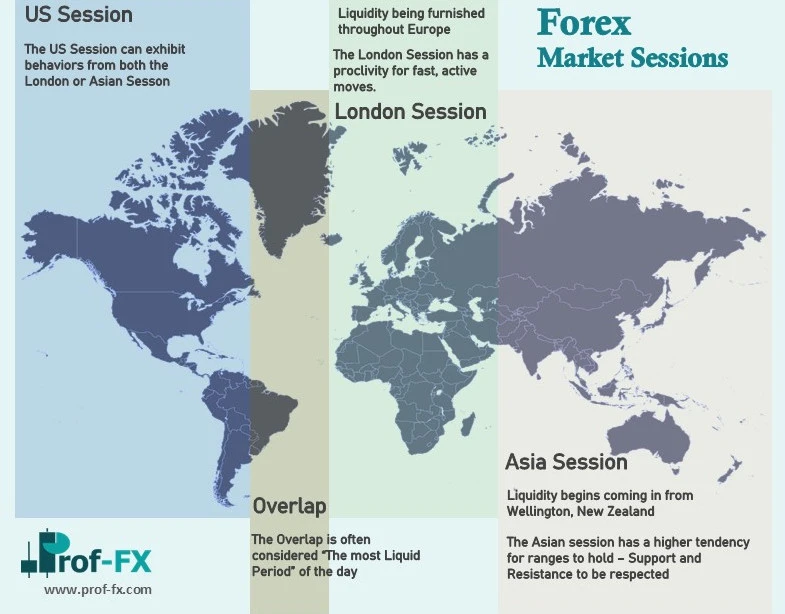
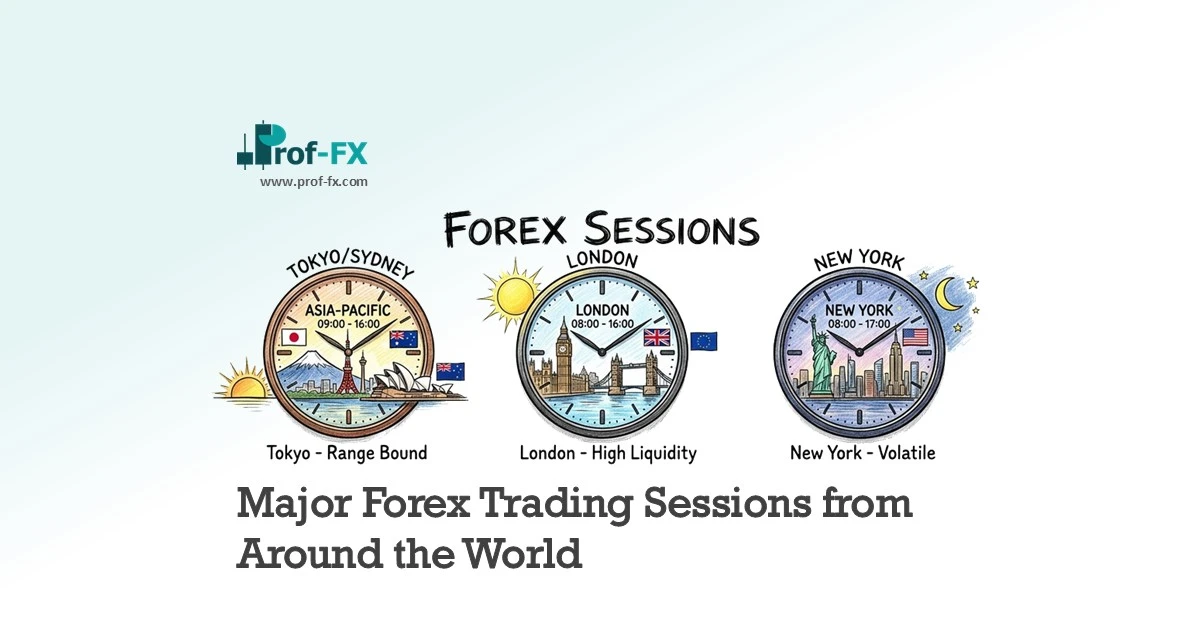
The forex market is conventionally divided into three primary sessions:
- Asian Session (Tokyo)
- European Session (London)
- US Session (New York)
During these periods, major banks, financial institutions, and retail traders are actively participating in the market, creating liquidity and price movement. Recognizing the timing of each session allows traders to align their strategies with periods of optimal market conditions.
Forex Trading Session Times (GMT)
| Session | Major Market | Time (GMT) |
| Asian | Tokyo | 00:00 – 09:00 |
| European | London | 08:00 – 17:00 |
| US | New York | 13:00 – 22:00 |
Asian Trading Session (Tokyo)
The Asian session or Tokyo Session is the first to open in the 24-hour trading cycle. Market participants in this region often set the initial tone for the day, using early price action to position themselves for upcoming sessions.
Approximately 6% of global forex transactions occur during this session, making it the least volatile among the three major sessions.
From a strategic perspective, the Asian session is typically characterized by:
- Lower liquidity
- Narrower price ranges
- Reduced volatility in major currency pairs like EUR/USD and GBP/USD
However, currencies such as AUD and NZD may experience more activity due to regional economic influence.
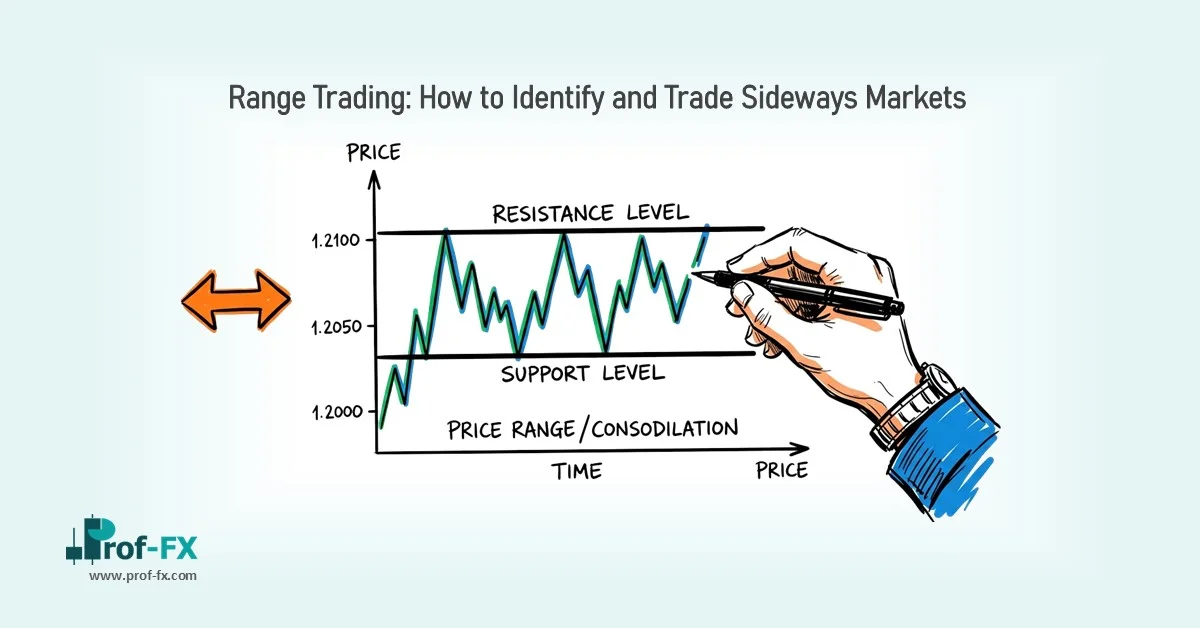
The key takeaway is that the Asian session is generally more suitable for range-bound trading strategies, rather than breakout or trend-following approaches.
European Trading Session (London)
The London session is the most significant forex trading session, accounting for approximately 34% of global trading volume. As the world’s primary financial hub, London hosts a large concentration of institutional participants, including major banks and hedge funds.
This high level of participation results in:
- Increased liquidity
- Higher volatility
- Larger price movements across major currency pairs
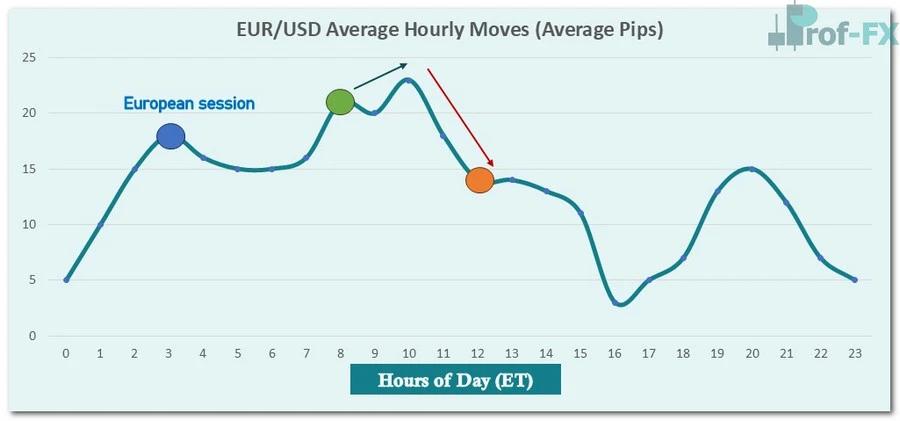
When the London session opens, the influx of orders often leads to a noticeable increase in the average hourly range, particularly for pairs such as EUR/USD.
This session is widely regarded as the most favorable for:
- Trend-following strategies
- Breakout trading
- High-volume execution
From a professional standpoint, the London session represents the core of daily forex activity, making it a critical window for identifying high-probability trade setups.
US Trading Session (New York)
The New York session is the second-largest forex market, contributing approximately 16% of global trading volume. Its importance is amplified by the overlap with the London session, which creates one of the most active trading periods of the day.
During the London–New York overlap (13:00–17:00 GMT):
- Liquidity reaches peak levels
- Volatility increases significantly
- Major economic data releases often occur
As European markets close, liquidity begins to decline, leading to reduced price movement in the later stages of the US session.
The earlier chart highlights this behavior:
- A surge in volatility when the US session opens
- A peak during the overlap period
- A decline as London exits the market
This session is particularly suitable for:
- News trading strategies
- High-volatility breakout trades
- Short-term momentum trading
When Is the Best Time to Trade Forex?
Market timing plays a crucial role in trading performance. Historical data indicates that European currency pairs tend to perform more consistently during periods of moderate liquidity.
For example:
- The 19:00 – 11:00 GMT window often exhibits lower volatility, making it suitable for range trading strategies
- Traders can utilize tools such as the Relative Strength Index (RSI) to identify overbought and oversold conditions
Strategy-Based Timing Approaches:
Range Trading (Support & Resistance):
- Best suited for: Late US session into Asian session (19:00 – 07:00 GMT)
- Market condition: Lower volatility, stable price ranges
Trend & Breakout Trading:
- Best suited for: London session (08:00 – 17:00 GMT)
- Market condition: High liquidity, strong directional moves
Additionally, trading Asian currencies (AUD, NZD) during the Asian session may present breakout opportunities due to localized economic activity.
Conversely, attempting to trade European currency breakouts during the Asian session often leads to suboptimal results due to limited volatility and reduced participation.
Final Perspective: Aligning Strategy with Market Sessions
Each forex trading session offers distinct opportunities based on liquidity, volatility, and participant behavior:
- The Asian session favors stability and range-bound strategies
- The London session delivers the highest volatility and trend potential
- The New York session provides strong momentum, especially during overlap periods
Professional traders do not treat all trading hours equally. Instead, they align their strategies with specific session characteristics, ensuring that execution occurs under favorable market conditions.
Understanding and applying this session-based framework is essential for improving trade timing, reducing unnecessary risk, and achieving consistent performance in the forex market.
Further Learning to Enhance Your Trading
To continue developing your trading expertise, consider exploring:
- Foundational forex education for beginners
- Advanced trading strategy guides
- Research-based insights into trader performance and behavior
A structured approach to learning, combined with disciplined execution, remains the most reliable path toward long-term success in forex trading.
Prof FX provides forex news and technical analysis, focusing on the key forces that influence global currency market trends.