
Why You Should Use a Trading Checklist
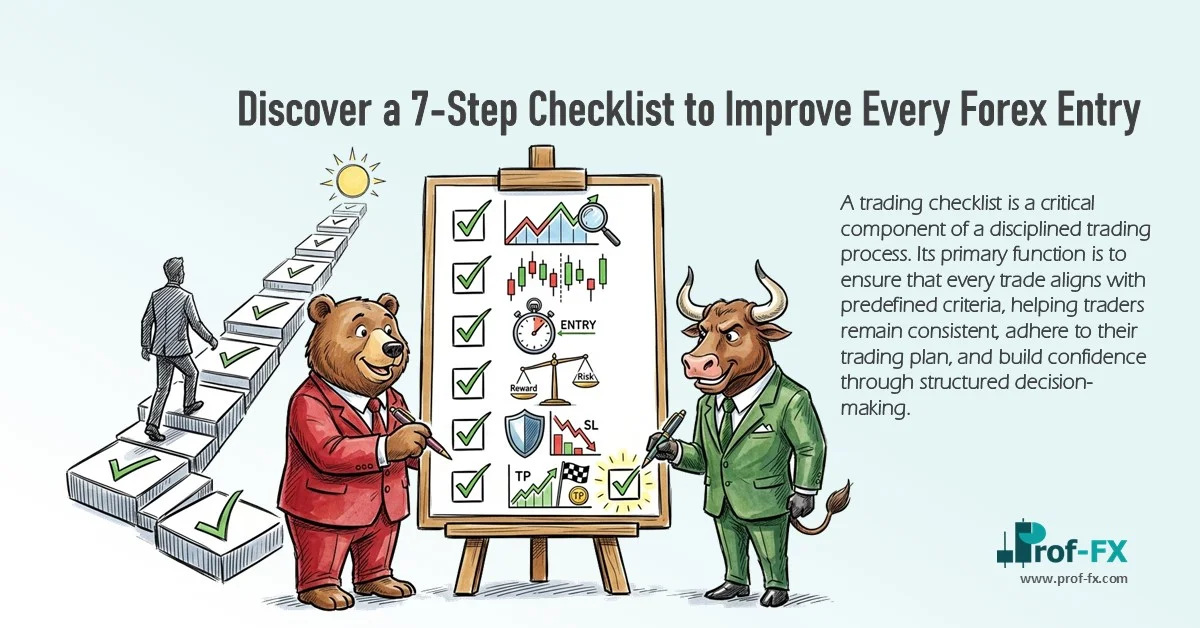
A trading checklist is a critical component of a disciplined trading process. Its primary function is to ensure that every trade aligns with predefined criteria, helping traders remain consistent, adhere to their trading plan, and build confidence through structured decision-making.
It is important to distinguish between a trading plan and a trading checklist. A trading plan defines the broader framework, such as markets traded, preferred strategies, and overall methodology. In contrast, a trading checklist operates at the execution level, focusing on the specific conditions that must be satisfied before entering any individual trade.
By systematically answering a set of predefined questions, traders can reduce emotional decision-making and improve the quality of their trade execution.
Your Trading Checklist
Before entering a trade, traders should evaluate the following key questions:
- Is the market trending or ranging?
- Is there a significant level of support or resistance nearby?
- Is the trade confirmed by an indicator?
- What is the risk-to-reward ratio?
- How much capital am I risking?
- Are there any significant economic releases that could impact the trade?
- Am I following the trading plan?
Each of these elements plays a distinct role in ensuring that trades are well-structured and aligned with both strategy and market conditions.
1) Is the Market Trending or Ranging?
Trending Markets
Identifying a strong trend and trading in its direction is widely regarded as a higher-probability approach. Trending markets often provide sustained directional movement, which can compensate for less-than-perfect entry timing.
As illustrated below, even late entries in a well-established trend may still capture meaningful price movement in the direction of the trend.
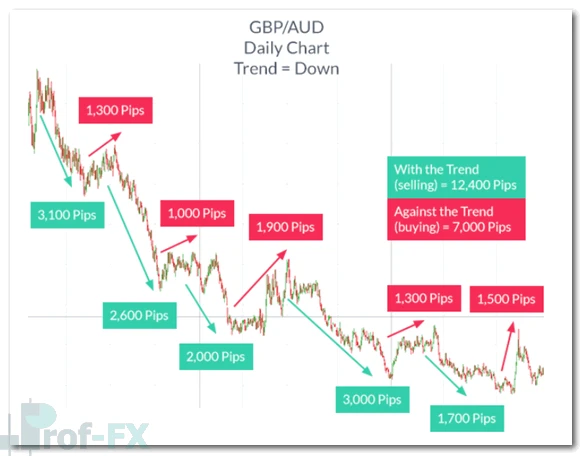
The key consideration is whether current market behavior supports a trend-following strategy, and whether this approach is consistent with the trader’s overall plan.
Ranging Markets
In contrast, ranging markets are characterized by price oscillating between defined support and resistance levels, forming a horizontal channel. These conditions are common in specific sessions, such as the Asian trading session.
Oscillators like the RSI, CCI, and Stochastic are particularly useful in these environments, as they help identify overbought and oversold conditions within the range.
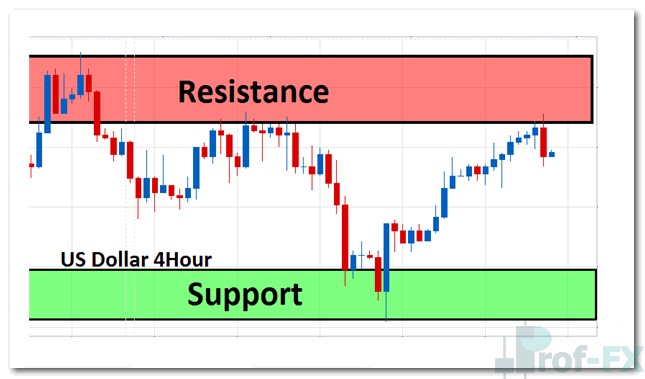
A clear understanding of whether the market is trending or ranging allows traders to select the most appropriate strategy.
2) Is There a Significant Level of Support or Resistance Nearby?
Support and resistance levels are fundamental to price action analysis. Markets often react to these levels due to concentrated buying or selling interest.
Entering a short position near a strong support level increases the likelihood of a reversal, while entering a long position near resistance exposes the trade to downside risk.
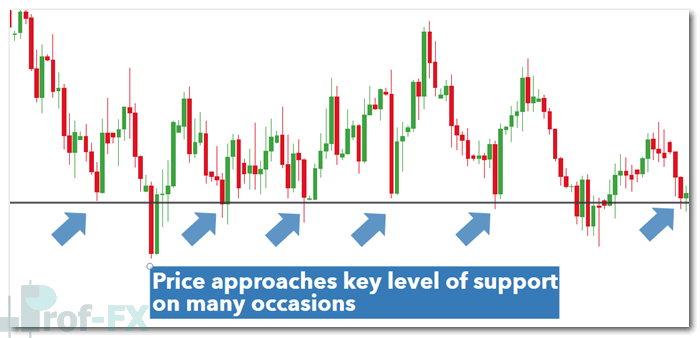
Trend traders often look for decisive breaks of these levels as confirmation of continued momentum, while range traders anticipate price reversals within these boundaries. Proper identification of these levels is essential for both entry timing and risk management.
3) Is the Trade Confirmed by an Indicator?
Technical indicators serve as confirmation tools, helping traders validate potential setups. Depending on the strategy, one or two well-chosen indicators are typically sufficient.
Overloading charts with multiple indicators can complicate analysis and lead to conflicting signals. A clean and focused approach enhances clarity and decision-making efficiency.
Indicators should complement, not replace price action and overall market structure.
4) What is the Risk-to-Reward Ratio?
The risk-to-reward ratio measures the potential reward of a trade relative to the risk taken. For example, a 1:2 ratio means risking one unit to potentially gain two.
Research analyzing millions of live trades has shown that traders who consistently apply positive risk-to-reward ratios are significantly more likely to achieve long-term profitability.
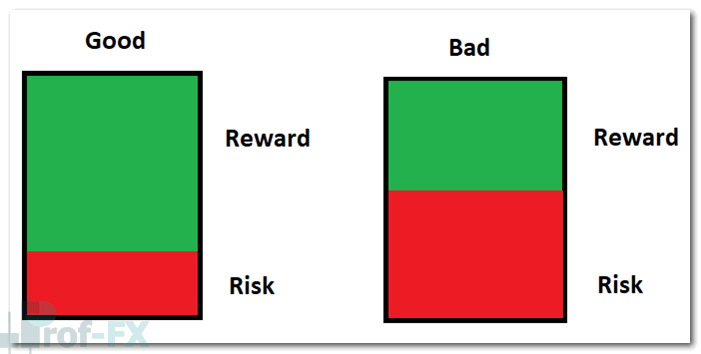
This principle reinforces the importance of structuring trades where potential gains justify the risks involved.
5) How Much Capital Am I Risking?
Capital preservation is a foundational principle in trading. Excessive leverage and overexposure are common reasons for account losses.
To mitigate this, traders are advised to:
- Limit leverage usage (for example, no more than 10:1 maximum 100:1)
- Risk only a small percentage of account equity per trade (commonly 1 – 5%)
- Always use stop-loss orders to control downside risk
Before executing a trade, traders must clearly define how much capital is at risk and ensure it aligns with their risk management rules.
6) Are There Any Significant Economic Releases That Can Impact the Trade?
Economic news releases can introduce sudden volatility, potentially invalidating otherwise well-structured trades.
While unpredictable events cannot be controlled, scheduled economic data—such as Non-Farm Payrolls (NFP), CPI, PMI, and GDP—can be anticipated.
Traders should monitor an economic calendar to stay informed about high-impact events and adjust their trading decisions accordingly.
7) Am I Following the Trading Plan?
This final step is the most critical. Even if all technical and fundamental conditions are favorable, a trade should not be executed if it does not align with the trading plan.
Deviating from a structured plan leads to inconsistency, emotional trading, and unreliable results. The checklist serves as a safeguard to ensure discipline and adherence to predefined rules.
Trading Checklists: A Summary
A trading checklist does not guarantee that every trade will be profitable. However, it significantly improves consistency, reinforces discipline, and reduces the likelihood of impulsive or poorly planned trades.
By systematically applying a checklist before every trade, traders can ensure that each position is supported by objective analysis and aligned with their broader strategy.
Additionally, maintaining a trading journal alongside the checklist can further enhance accountability and performance tracking.