Understanding Market Conditions: Trend vs Range
Financial markets can exhibit a wide variety of behaviors, but when reduced to their core structure, price action operates in only two primary states: trending or non-trending.
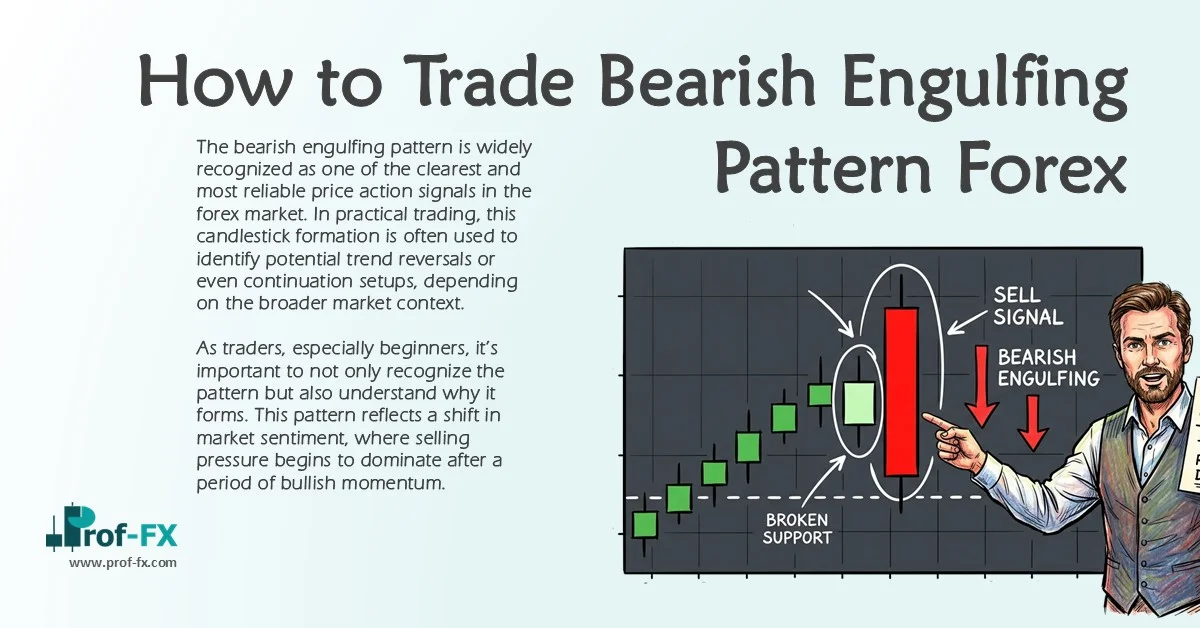
- An uptrend is defined by higher highs and higher lows
- A downtrend is characterized by lower highs and lower lows
- When neither condition is present, the market enters a range-bound or trendless state
This non-trending environment is commonly referred to as a range. However, the concept is often misunderstood. While textbook definitions suggest clean symmetry between support and resistance, real market conditions rarely display such perfection.
In practice, most ranging markets are irregular, uneven, and sometimes volatile within boundaries. Therefore, traders must rely on structured definitions rather than idealized chart examples.
What Is a Range in Forex Trading?
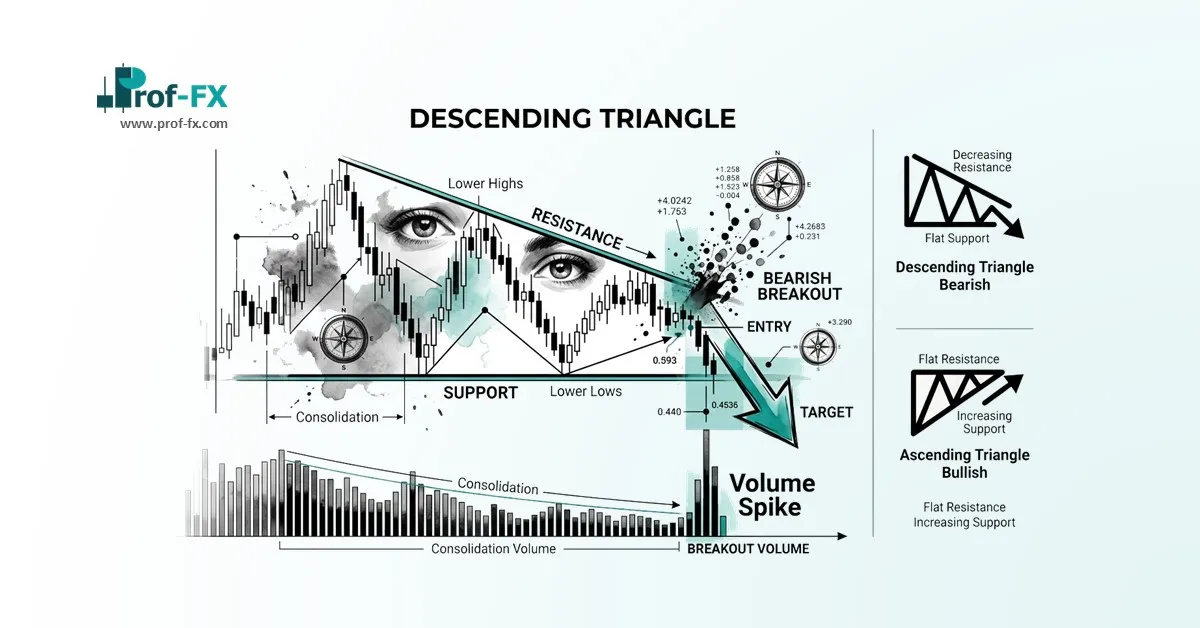
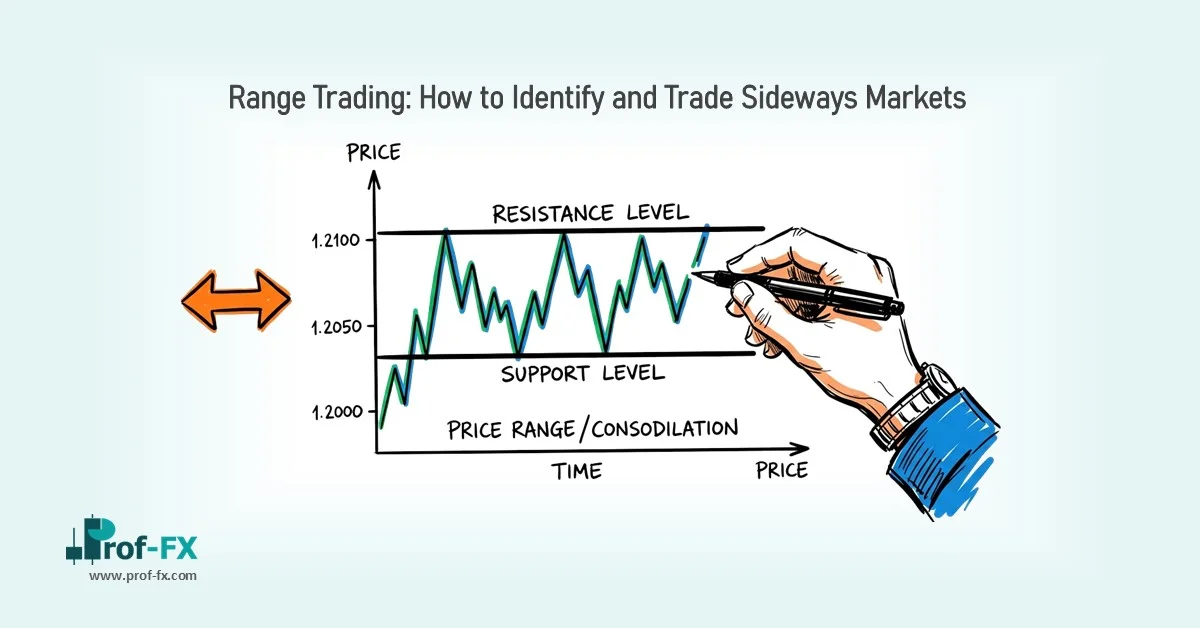
A range is defined as a market condition where price fluctuates between established support and resistance levels without forming a clear directional trend. This environment is typically associated with mean reversion, where price repeatedly returns toward an average level.
However, identifying a range is inherently subjective:
- What appears as a range on a lower timeframe (e.g., 1-hour chart)
- May simply be a consolidation phase within a larger trend on a higher timeframe (e.g., daily chart)
This multi-timeframe dynamic reinforces the need for objective tools when classifying market conditions.
Using ADX to Identify Ranging Markets
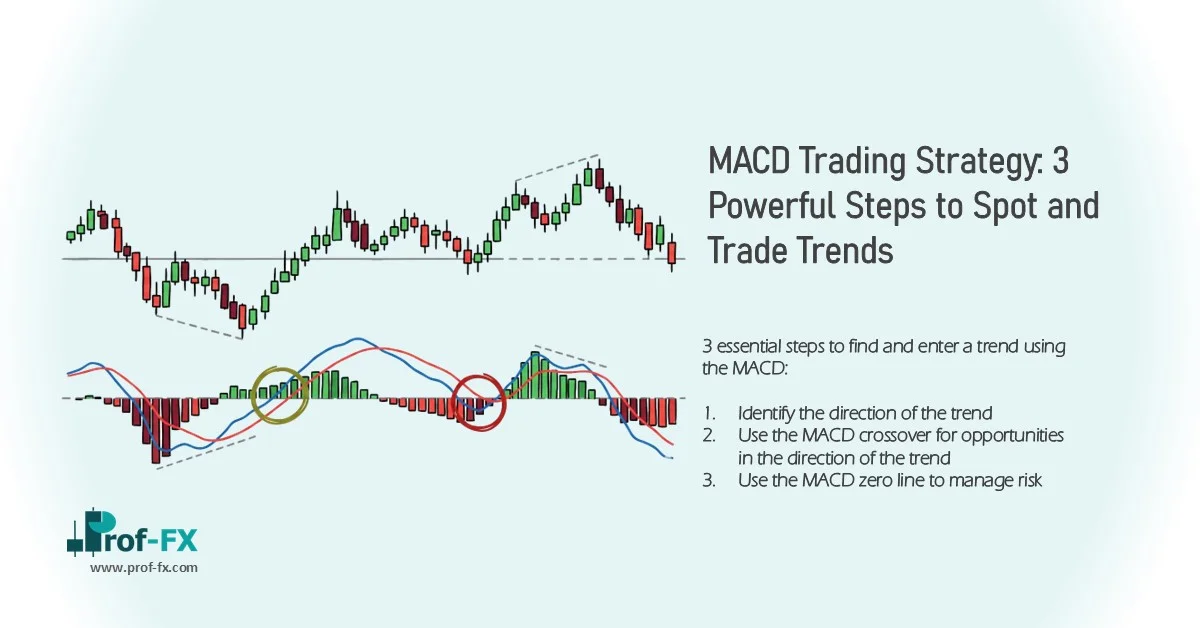
One of the most effective tools for distinguishing between trending and ranging environments is the Average Directional Index (ADX).
The ADX is designed specifically to measure trend strength, without indicating direction. It is typically calculated over 14 periods, although this can be adjusted.
A widely accepted interpretation is:
- ADX above 20–25: Trending market
- ADX below 20: Weak or non-trending (range-bound) market
When ADX falls below 20, it indicates a lack of directional strength, making the market more suitable for range trading strategies.
EUR/USD Daily Chart with ADX Example
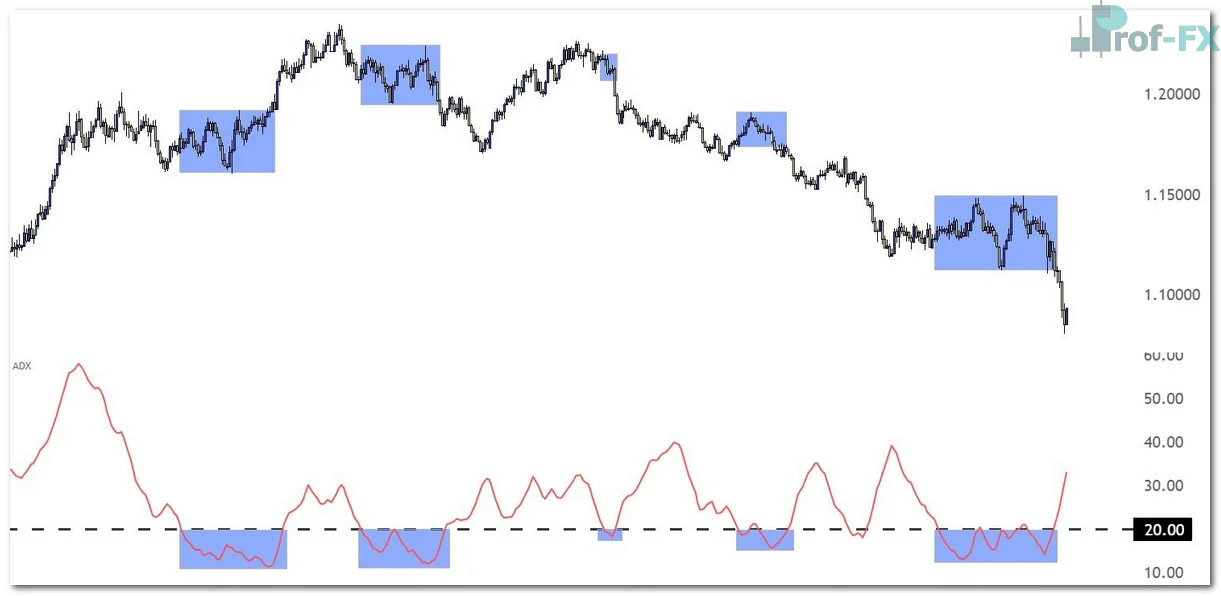
This type of objective measurement allows traders to systematically identify ranging conditions, reducing subjectivity and improving decision-making consistency.
Why Traders Choose Range Trading
We have the flexibility to select environments that align with our strategies. Many traders deliberately focus on range-bound markets due to their structured and repeatable nature.
One of the primary advantages of range trading is consistency. The strategy often follows a straightforward logic:
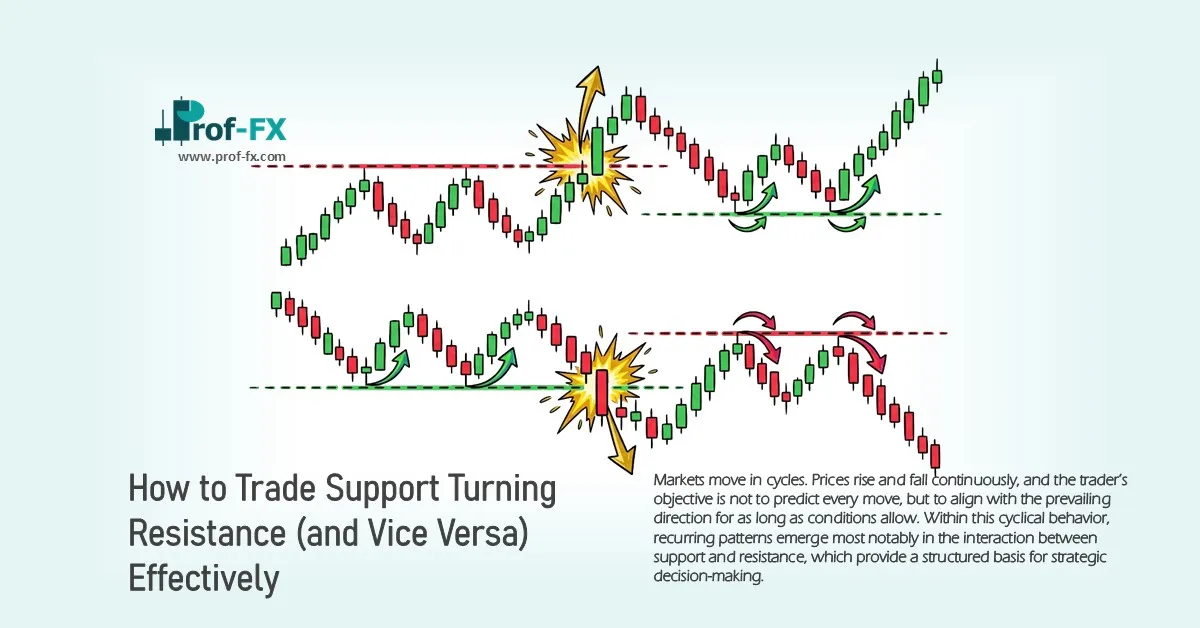
- Buy near support
- Sell near resistance
- Exit if the range breaks
This “if/then” framework simplifies both execution and risk management, making it particularly attractive for disciplined traders.
Range Trading and Mean Reversion
Range trading is closely linked to the concept of mean reversion, where price tends to move back toward an average after reaching extreme levels.
Although trading reversals can be inherently risky since it involves anticipating a change in direction, the structured nature of ranges provides a clear advantage:
- Defined entry zones (support/resistance)
- Clear invalidation points (range breakout)
- Measurable risk parameters
For example:
- A trader entering a long position at support expects price to revert upward
- If support breaks, the setup is invalidated, and the trader can exit quickly using a predefined stop loss
This approach minimizes emotional decision-making and prevents prolonged exposure to losing trades.
Risk Management in Range Trading
One of the strongest advantages of range trading lies in its clarity of risk control.
Key principles include:
- Placing stop loss just outside support or resistance levels
- Defining take profit near the opposite boundary of the range
- Maintaining a favorable risk-to-reward ratio
Because the boundaries of the range are well-defined, traders can establish precise exit strategies before entering a trade. This level of planning is essential for long-term consistency.
Conclusion: Mastering Range Trading for Consistent Performance
Range trading provides a structured and methodical approach to navigating non-trending markets. By focusing on support and resistance, combined with tools like the ADX indicator, traders can identify high-probability opportunities within sideways price action.
While no market condition is inherently superior, range trading stands out for its clarity, repeatability, and strong risk management framework. Traders who specialize in this environment often benefit from consistent execution and reduced uncertainty.
In professional trading, the ability to correctly identify whether a market is trending or ranging is not optional, it is a fundamental skill that directly impacts performance.