
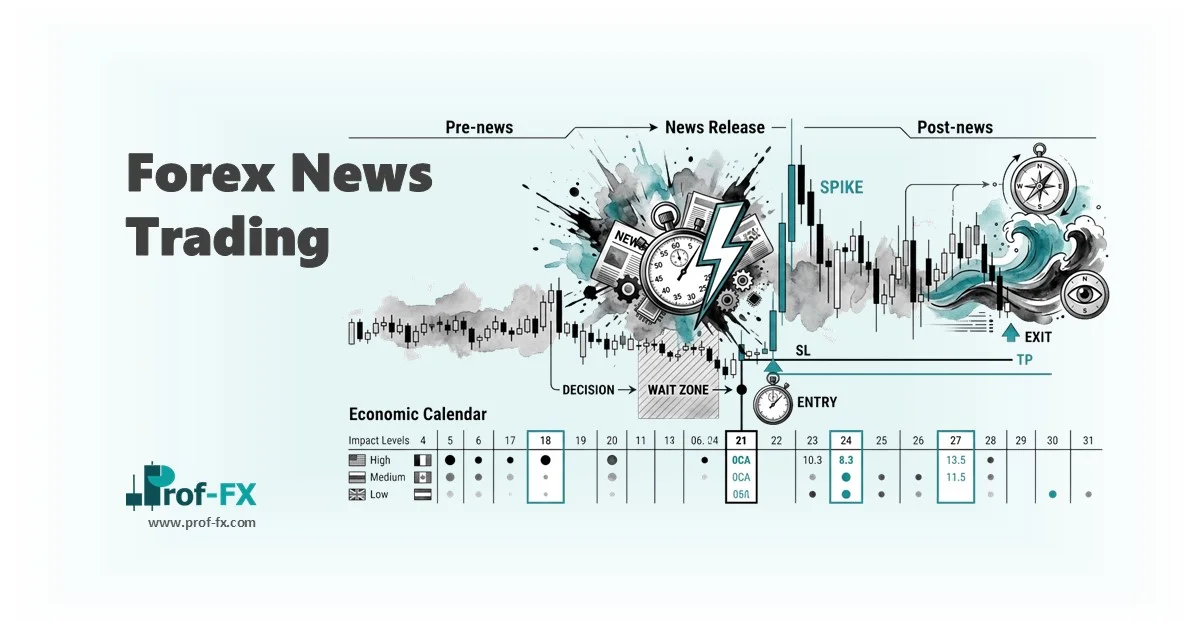
Major economic data releases have the capacity to trigger substantial movements in the forex market. This movement commonly referred to as volatility, is precisely what attracts many newer traders when they begin learning how to trade forex news. A structured understanding of key announcements, their timing, and execution methods is essential. In practice, mastering news trading is less about prediction and more about preparation, timing, and disciplined risk control.
Why Trade Forex News?
Forex traders are drawn to news-based trading primarily because of volatility. Economic announcements such as GDP figures, inflation data, and employment reports frequently act as catalysts for rapid price movements. These releases are typically categorized by importance, and traders tend to focus on high-impact events due to their proven ability to influence currency markets.
The most significant market reactions often occur when there is a deviation between expected and actual data. This “surprise factor” drives sharp bullish or bearish movements. Importantly, traders do not need advanced economic qualifications to interpret such events, as economic calendars already provide consensus forecasts from professional economists.
Additionally, news releases are scheduled at predefined dates and times. This structured timing allows traders to prepare strategies in advance rather than react impulsively. Traders who consistently manage volatility risk and execute plans during these scheduled events are far more likely to achieve long-term consistency.
The Impact of Major News Releases on the Forex Market
Immediately before major announcements, market conditions typically shift. Trading volume and liquidity often decline, while spreads widen. This occurs because large liquidity providers like institutional participants, reduce exposure due to uncertainty surrounding the outcome of the news.
When the data is released, price action can become highly erratic. Sharp spikes may occur within seconds, often leading to slippage where stop loss orders are executed at worse-than-expected levels. This environment significantly increases risk, especially for traders who are unprepared.
Furthermore, widened spreads can put additional pressure on margin requirements. Traders with insufficient free margin may face margin calls, even if their trade direction is correct. These conditions make it clear that trading during high-impact news without proper risk management can quickly deplete trading capital.
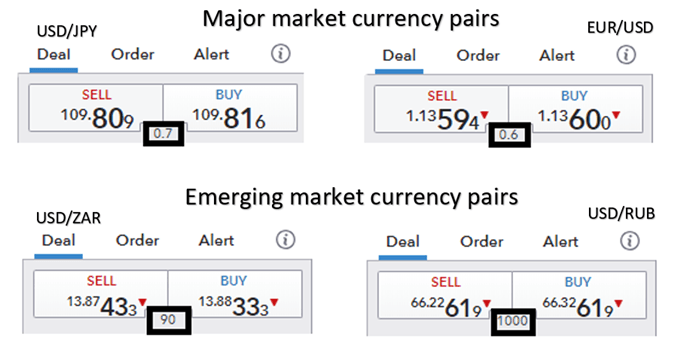
From a structural standpoint, major currency pairs such as EUR/USD, USD/JPY, GBP/USD, AUD/USD, and USD/CAD generally offer tighter spreads compared to minor or emerging market pairs. As a result, they are typically more suitable for news trading strategies.
Preparation is not optional it is a prerequisite. Traders must identify which events to trade, understand their timing, and implement a clearly defined trading plan. As famously stated by William Eckhardt:
“Don’t think about what the market’s going to do; you have absolutely no control over that. Think about what you’re going to do if it gets there.”
This perspective reinforces a critical truth: successful trading is rooted in reaction planning, not prediction.
Which Major Forex News Releases Should You Trade?
Understanding which economic releases influence the market is fundamental. Among all global data, US economic indicators are widely regarded as the most impactful due to the dominance of the US dollar in global finance.
However, not all news events generate volatility. Only a select group of releases consistently produce strong market reactions. These include employment data, GDP figures, and central bank interest rate decisions.
Below is a structured overview of major global economic releases:
Major News Releases (US and Global)
- Non-Farm Payrolls (NFP) – Released monthly (first Friday, 8:30am EST): Measures changes in US employment levels.
- US Gross Domestic Product (GDP) – Quarterly (8:30am EST): Reflects total economic output.
- Federal Funds Rate (Federal Reserve) – 8 times per year: Determines US interest rate policy.
- Australian Cash Rate – Monthly (first Tuesday, excluding January): Central bank interest rate.
- Australian Employment Change – Monthly: Tracks labor market conditions.
- ECB Refinancing Rate – 8 times per year: Governs Eurozone liquidity.
- Bank of England Rate Decision – Monthly: UK interest rate benchmark.
- Bank of Canada Overnight Rate – 8 times per year: Lending rate between institutions.
- Canadian Employment Change – Monthly: Labor market indicator.
- Reserve Bank of New Zealand Cash Rate – 7 times per year: Monetary policy rate.
These releases form the backbone of forex news trading. Ignoring them means operating without awareness of the primary drivers of volatility.
Key Tools & Resources for Trading Forex News
Access to accurate and timely data is critical. Professional traders rely on integrated tools to monitor and respond to economic developments effectively:
- Economic Calendar: Tracks major releases such as NFP, CPI, PPI, GDP, and ISM data.
- Central Bank Calendar: Lists scheduled interest rate decisions and policy meetings.
- Real-Time News Feed: Provides immediate updates and expert analysis on breaking developments.
Using these tools is not optional it is essential for informed decision-making in a fast-moving market environment.
Managing Risk When Trading News
Risk management becomes even more critical during periods of heightened volatility. The use of stop loss orders is strongly recommended, but in volatile conditions, guaranteed stop losses (where available) offer additional protection against slippage.
Although guaranteed stops may involve a small fee, this cost is often negligible compared to the potential losses caused by extreme price gaps.
Another key strategy is reducing position size. While volatility can amplify profits, it can just as easily accelerate losses. Smaller trade sizes help maintain emotional discipline and preserve account equity during unpredictable conditions.
Three Core Approaches to Forex News Trading
Forex news trading strategies can be categorized based on timing relative to the release:
1. Trading Before the News Release
This approach favors lower volatility conditions. Traders often use range trading or trend-following strategies before the announcement. It is particularly suitable for risk-averse traders seeking controlled exposure.
2. Trading During the Release
This method involves entering trades as the news is released. It offers the highest potential reward but also carries the greatest risk due to extreme volatility, slippage, and spread widening. Only traders with a well-defined strategy and strict risk management should consider this approach.
3. Trading After the Release
Post-release trading allows the market to stabilize and reveal directional bias through price action. This approach is widely regarded as more strategic, as it relies on confirmation rather than speculation.
Top 3 Things to Remember When Trading News
- Preparation is essential: Avoid impulsive trading. Develop and test strategies in advance.
- Expect wider spreads: Ensure sufficient free margin to withstand temporary expansion.
- Respect volatility: Adjust position size and stop loss distance to reflect market conditions.
Trading the News – Frequently Asked Question
How do high-impact news releases affect existing trades?
The effect depends on both the currency pair and the nature of the data released. For example, a change in interest rates by the European Central Bank will directly impact all EUR based pairs.
Since currencies trade in pairs, traders must also consider the relative strength or weakness of the counterpart currency. Unexpected data deviations tend to generate the most significant price reactions, which can positively or negatively impact open positions.
From a practical standpoint, traders should evaluate their positions before a major release. If the market is close to a stop loss or take profit level, closing the trade may be the more prudent decision. Protecting capital should always take priority over uncertain gains, especially in volatile conditions where slippage can magnify losses.
In conclusion, trading forex news is not about reacting emotionally to market spikes. It is a structured discipline that combines preparation, timing, and risk management. Traders who approach news events with a clear strategy and controlled execution are the ones who consistently turn volatility into opportunity.