


Skip to content
Prof FX
  • Home
  • Market
    • Analysis & Outlook
    • News
  • Central Banks
    • Federal Reserve
    • European Central Bank
    • Bank of England
    • Bank of Canada
    • Bank of Japan
    • Reserve Bank of Australia
    • Reserve Bank of New Zealand
    • Swiss National Bank
  • Education
    • Forex Basics
    • Technical
    • Fundamental
    • Forex Advanced
    • Risk Management
    • Trading Psychology
    • Economic
    • Investing
  • Forex Courses
  • Resources
    • MT4 Indicator
    • MT5 Indicator
    • Ebook
  • Brokerage
    • All Forex Brokers
    • Broker News
    • Regulation Authorities
    • Broker Programs
  • Tools
  • English
    • English
    • Bahasa Indonesia
    • Bahasa Melayu
MENU
  • Index
  • Deposit Bonuses
  • No Deposit
  • Demo Contest
  • Live Contest
Forex Advertising Header - headway
Forex Advertising rectangle - headway
Forex Advertising Footer - headway
NZD - RBNZ Press Conference
Forecast: - | Previous: -
Collecting data.
Wait until next event.
00 Days
00 Hours
00 Minutes
00 Seconds
Trade Now!

Author: Martin Thomas

Martin is a financial markets analyst and trader with over 15 years of experience across equities, options, futures, FX, and interest rates. His approach combines price-behavior analysis with disciplined risk management, offering traders clear, actionable insights. At Prof FX, Martin focuses on delivering practical market guidance and educational content that supports informed, process-driven trading decisions.
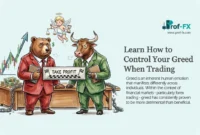
Learn How to Control Your Greed When Trading

By Martin ThomasPosted on July 2June 28

Greed is an inherent human emotion that manifests differently across individuals. Within the context of financial markets – particularly forex …

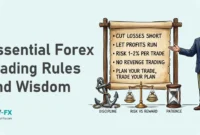
Essential Forex Trading Rules and Wisdom

Essential Forex Trading Rules and Wisdom

By Martin ThomasPosted on June 27June 23

Trading Rules and Wisdom This article outlines a series of core rules and trading principles that can help traders stay …
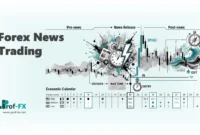
Forex News Trading

An Introduction to Forex News Trading and Its Impact on Currency Markets

By Martin ThomasPosted on June 25June 25

Major economic data releases have the capacity to trigger substantial movements in the forex market. This movement commonly referred to …
Risk Management Introduction to Risk Management Risk management is a fundamental component of any professional trading plan. Without a clearly defined and consistently applied risk framework, long-term success in forex trading is statistically unlikely. A structured approach to managing risk ensures that traders can navigate uncertainty while preserving capital and maintaining operational consistency. Risk Management Is Paramount to Success Effective risk management is not optional, it is essential. The primary objective for any trader is capital preservation, as survival in the market is a prerequisite for profitability. A well-defined strategy, combined with disciplined execution, significantly increases the probability of long-term success. For traders in the early stages, the priority is to minimize losses while gaining experience. Maintaining small, controlled losses allows for continuous participation in the market without jeopardizing the trading account. This phase is critical for building a sustainable foundation. For experienced traders, the focus shifts toward avoiding unnecessary drawdowns and eliminating the risk of account depletion (risk of ruin). Even with a profitable strategy, inconsistent application of risk management rules can significantly hinder account growth and performance stability. Individual Trade Management The amount of capital risked per trade should align with the trader’s risk tolerance and psychological comfort. Position sizing must be calibrated to ensure that decision-making remains objective and unaffected by emotional pressure. Excessive position size is a common cause of poor discipline. When too much capital is at risk, traders are more likely to deviate from their plan, leading to inconsistent outcomes. Therefore, controlling trade size is a critical factor in maintaining execution quality. Trading Size Based on Percentage at Risk A professional approach to position sizing is to think in percentage terms rather than absolute values. Instead of focusing on pip counts, lot sizes, or price points, traders should determine how much of their total capital they are willing to risk per trade. This approach introduces dynamic position sizing, where trade size adjusts based on the distance to the stop loss. For example: If risking 1% per trade A trade with a 50 pip stop will have a larger position size A trade with a 100 pip stop will have a smaller position size This ensures that risk remains constant, regardless of market conditions. Conversely, using fixed lot sizes leads to inconsistent risk exposure. Similarly, using fixed pip targets without regard to market structure can result in poorly placed stop loss and take profit levels that do not align with technical analysis. A simplified comparison highlights the importance of this method: Trade 1: Risk 1%, gain 2% → Net +2% Trade 2: Risk 1%, loss 1% → Net +1% overall This demonstrates that consistent percentage-based risk management produces positive expectancy, even with mixed results. Maintain Consistency in Risk Per Trade Consistency in risk-per-trade is critical. Significant variation, such as risking 0.5% on one trade and 3% on another, introduces instability and undermines performance tracking. While it is acceptable to slightly increase risk on higher-confidence setups, deviations should remain controlled and within a narrow range. The perceived probability difference between trade setups is often overstated, and over-adjusting position size based on subjective confidence can lead to unnecessary volatility in results. Win Rate Should Not Be the Primary Objective A high win rate is often misunderstood as the key to success. In reality, risk/reward ratio plays a more decisive role in long-term profitability. A structured approach typically targets a minimum risk/reward ratio of 1:2, meaning the potential reward should be at least twice the risk. For example: A 35% win rate with a 1:4 risk/reward ratio can outperform A 65% win rate with a 1:1 risk/reward ratio This demonstrates that asymmetrical risk profiles are more valuable than frequent small wins. Professional traders prioritize setups that offer a clear edge and favorable payoff structure. Factors in Determining Trade Size Several variables must be considered when defining position size: 1. Losing Streak Potential All trading strategies experience drawdowns. Certain strategies, such as breakout or momentum trading, may have lower win rates but higher reward potential. Others, like range trading or mean reversion, typically have higher win rates but lower risk/reward ratios. Traders must anticipate sequences of losses, potentially 10 or more, and ensure their risk model can withstand such scenarios without significant capital damage. 2. Trade Frequency Trade frequency directly impacts risk exposure: Low-frequency traders (e.g., swing traders holding positions for weeks) can afford slightly higher risk per trade High-frequency traders (e.g., day traders) must reduce risk per trade due to rapid accumulation of exposure Balancing frequency and risk is essential for maintaining account stability. Hard Stops Are Essential A hard stop loss, an order placed directly in the trading platform, is a critical risk control mechanism. There are three key reasons to use hard stops: Automation: Positions are protected even when the trader is not actively monitoring the market Discipline: Predefined exit levels enforce consistency and prevent emotional decision-making Protection from unexpected events: Sudden market volatility or news events can cause rapid price movements Relying on “soft stops” introduces unnecessary risk and reduces execution reliability. Account-Level Risk Management Risk management must extend beyond individual trades to encompass the entire trading account. This broader perspective ensures that cumulative exposure remains controlled. Correlated Positions Trading multiple correlated instruments increases effective risk exposure. For example: Holding multiple positions involving JPY pairs Trading assets with strong inverse relationships, such as USD and gold In such cases, positions should be treated as a single aggregated risk, as they may move simultaneously. Adjusting position size accordingly prevents unintended overexposure. Maximum Drawdown Limit Every trader must define a maximum acceptable drawdown, such as -10%, -15%, or -20%. When this threshold is reached: Stop trading temporarily Step back to evaluate performance objectively Identify and correct underlying issues Resuming trading should be gradual: Start with 25–50% of normal position size Focus on rebuilding confidence and consistency Return to full size only after performance stabilizes This structured recovery process prevents further losses and restores discipline. Trading Around High-Impact Fundamental Events Major economic announcements introduce heightened volatility. For trades based on technical analysis: Existing positions may be held if the trader accepts the additional risk A properly placed stop loss must always be in place If a trade setup appears shortly before a major event, it is generally advisable to delay execution until after the announcement. This reduces exposure to unpredictable price spikes and slippage. Conclusion Risk management is the defining factor between short-term participation and long-term success in forex trading. By controlling position size, maintaining consistent risk exposure, applying favorable risk/reward ratios, and managing overall account risk, traders establish a resilient framework for sustained performance. A disciplined risk management strategy does not eliminate losses, it ensures that losses remain controlled, predictable, and recoverable. In professional trading, this principle is non-negotiable.

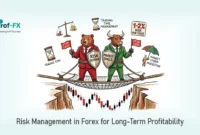
Risk Management in Forex for Long-Term Profitability

By Martin ThomasPosted on June 25June 23

Introduction to Risk Management Risk management is a fundamental component of any professional trading plan. Without a clearly defined and …
Multiple Time Frame Analysis for Better Forex Entries

Multiple Time Frame Analysis for Better Forex Entries

By Martin ThomasPosted on June 14June 13

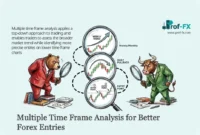
Multiple time frame analysis applies a top-down approach to trading and enables traders to assess the broader market trend while …
Differences Between Fundamental and Technical Analysis

Differences Between Fundamental and Technical Analysis in Forex

By Martin ThomasPosted on June 11June 11

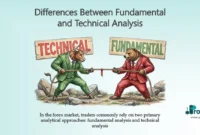
Understanding the Differences Between Fundamental and Technical Analysis in Forex Trading In the forex market, traders commonly rely on two …
Kevin Warsh The FED News

US Jobs Surge Reinforces Hawkish Fed Bias as Kevin Warsh Faces First Policy Test

By Martin ThomasPosted on June 8

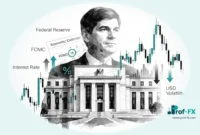
Strong US Labor Market Data Strengthens Case Against Early Monetary Easing A sharp acceleration in US job creation is reinforcing …
us federal reserve hawkish dovish

US CPI, Fed Signals, and Iran Tensions: Why This Week Could Drive Major USD Moves

By Martin ThomasPosted on May 11May 12

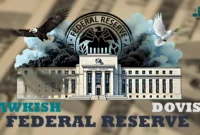
Key Week Ahead for US Economic Data US Data Releases and Federal Reserve Commentary Remain in Sharp Focus Although developments …
Technical Analysis Basics Every Forex Trader Should Know

Technical Analysis Basics Every Forex Trader Should Know

By Martin ThomasPosted on March 1May 14

Technical analysis has become one of the most widely used approaches in modern trading. With the rapid development of advanced …

Understanding the Consumer Sentiment Index

Understanding the Consumer Sentiment Index and Its Practical Applications in Financial Trading

By Martin ThomasPosted on February 21March 12

What Is Consumer Sentiment and Why It Matters for Traders? Consumer sentiment – often referenced as consumer confidence or the …
Understanding GDP Growth in Forex Trading

Understanding GDP Growth in Forex Trading: Why Economic Expansion Matters for Market Decisions

By Martin ThomasPosted on February 1March 12

What Economic Growth Really Means — And Why Traders Should Care Financial news cycles are often dominated by updates on …
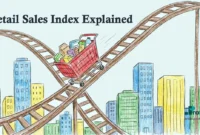
Retail Sales Index Explained

Retail Sales Index Explained: Why This Key Economic Indicator Matters for Traders Across Markets

By Martin ThomasPosted on January 31March 12

Understanding Retail Sales: A Core Metric of Consumer-Driven Economic Activity Retail Sales – often published as the Retail Sales Index …

Understanding Global Inflation

Understanding Global Inflation: Key Economic Drivers, Measurement Tools, and Market Implications for Traders

By Martin ThomasPosted on January 20March 12

Inflation remains one of the most critical macroeconomic forces shaping global financial markets, consumer behavior, and monetary policy decisions. For …
Supply and Demand vs Support and Resistance in Forex Trading

Supply and Demand vs Support and Resistance in Forex Trading: Key Differences and How to Use Them Together

By Martin ThomasPosted on January 19March 12

Supply and demand and support and resistance are two closely related concepts that often confuse newer traders. While they share …
Interest Rates and the Forex Market

Interest Rates and the Forex Market: How Central Bank Decisions Drive Currency Prices

By Martin ThomasPosted on January 17May 12

Interest rates have one of the strongest and most consistent relationships with the forex market. While currencies are influenced by …
How Employment Data Shapes Economic Growth and Forex Market Decisions

By Martin ThomasPosted on January 16March 12

Understanding Employment as a Core Driver of Economic Performance Employment is widely recognized as one of the most important indicators …
Compound Interest Calculator for Forex

Compound Interest Calculator for Forex and Stock Traders and Investors

By Martin ThomasPosted on March 5March 12

If you are into the stock or Forex market investment, you might have often heard about the term compound interest or …
Understanding the Over-the-Counter Trading

Understanding the Over the Counter Trading (OTC) in Forex Market

By Martin ThomasPosted on March 5March 12

Most of us trading in the forex market know that transactions happen over the counter, but generally we are so …

How Do Liquidity Providers Makes Money

How Do Liquidity Providers Make Money and Are They Market Makers?

By Martin ThomasPosted on March 4March 12

I’ve already talked about the difference of the true and false or fake ECN/STP brokers. Make sure not to miss …

Difference of True and False ECNSTP

How to Identify True vs. Fake ECN/STP Brokers

By Martin ThomasPosted on March 4March 12

Since many people trade online, traders have continuously expanded their knowledge and expertise. Years ago, many traders would have struggled …

The London Interbank Offered Rate (LIBOR)

LIBOR and Its Importance in Forex Market

By Martin ThomasPosted on February 18March 12

The financial markets are overflowing with jargons and acronyms and certain times you might feel overwhelmed by the steady flow …
Forex Advertising Package

Risk Disclaimer:
Prof FX is an independent media platform and does not provide investment or financial advice. Trading Forex and other leveraged products involves substantial risk and may result in losses exceeding your initial investment. Past performance is not indicative of future results. Always seek independent professional advice and fully understand the risks before trading. Read Full Disclaimer

  • About Us
  • Advertising
  • Contact Us
  • Disclaimer
  • Risk Disclaimer
  • Terms of Use
  • Privacy Policy

Follow us

  • Facebook
  • Twitter
  • LinkedIn
  • Pinterest
  • Mastodon
  • Flipboard
Prof FX
© 2018-2025 | Make money with your brain in futures market
prof.fx@gmail.com