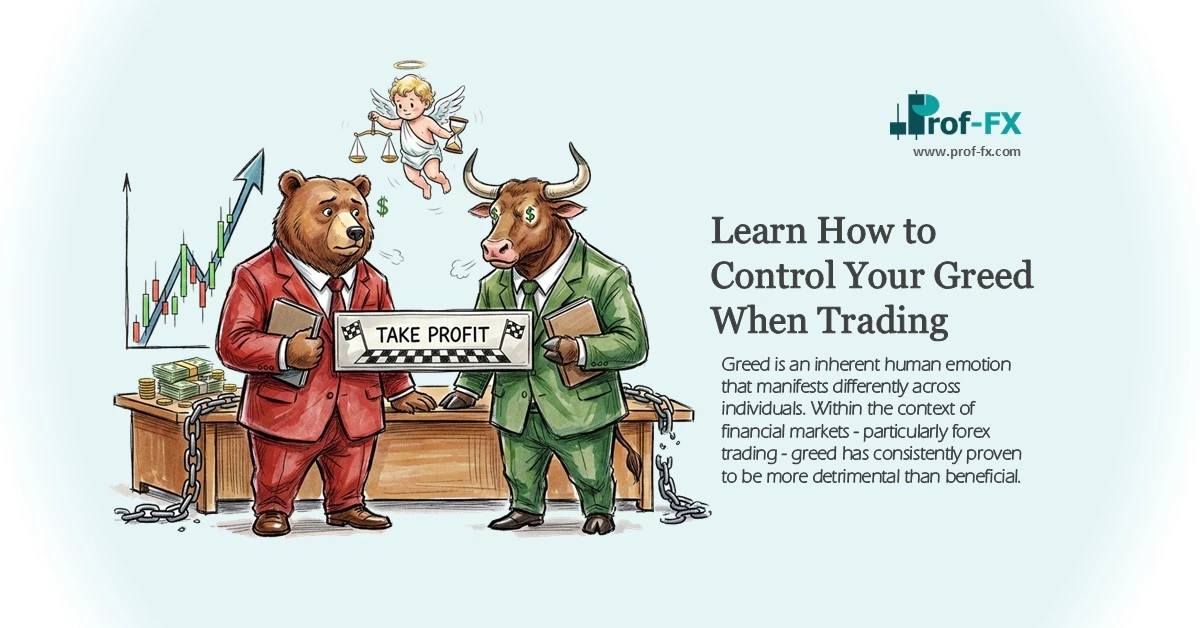
Greed is an inherent human emotion that manifests differently across individuals. Within the context of financial markets – particularly forex trading – greed has consistently proven to be more detrimental than beneficial. Rather than enhancing performance, it often distorts decision-making and undermines long-term profitability.
Uncontrolled greed can quickly transform well-planned trades into poor outcomes and exacerbate losses in already unfavorable positions. Therefore, understanding how to manage greed is not optional – it is a critical requirement for sustainable trading success.
What Is Greed in Trading and How Does It Affect Performance?
In trading, greed is best defined as an excessive desire to maximize profit, often without regard for risk. While the pursuit of profit is a natural objective, greed becomes problematic when it overrides rational judgment and risk management principles.
This emotional bias can influence traders during both losing and winning trades:
- In losing trades, greed may push traders to hold positions longer than justified, hoping for a reversal.
- In winning trades, it can encourage overexposure, leading traders to risk more capital than planned.
Common Manifestations of Greed in Trading:
- Doubling down on losing trades (averaging down without strategy)
- Adding excessive capital to winning positions
- Over-leveraging, increasing exposure beyond acceptable risk levels
From a psychological perspective, greed narrows a trader’s focus toward maximizing potential rewards (wealth, satisfaction), often at the expense of disciplined execution. As a result, traders may enter positions that deviate significantly from their original strategy.
More critically, such behavior exposes trading accounts to substantial risk. Over-leveraging, uncontrolled position sizing, and lack of risk limits can rapidly lead to margin calls or severe equity drawdowns. In professional trading environments, these actions are widely recognized as indicators of poor risk governance.
Real Example: How Greed Disrupts Trading Decisions
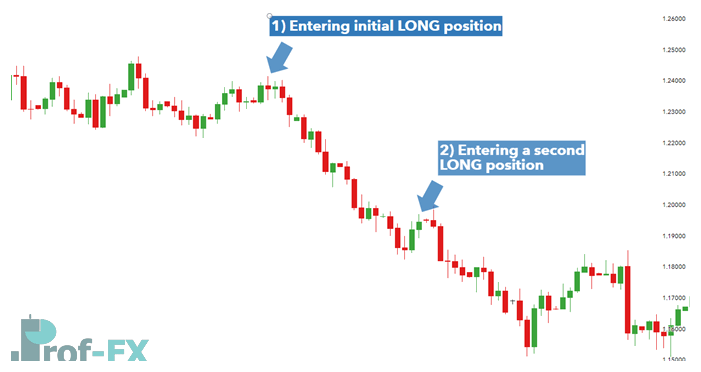
Consider a scenario where a trader initiates a long position on EUR/USD following a strong bullish candle – without applying a stop loss. The expectation is that the bullish momentum will continue.
However, the market reverses and moves lower, placing the trader in a losing position. Instead of exiting based on risk management rules, greed may encourage the trader to hold the position. Even more dangerously, the trader may open an additional long position when the market shows minor signs of recovery.
This behavior is typically driven by the belief that entering at a “better price” will convert the losing trade into a profitable one. In reality, this is a high-risk action that often compounds losses.
Moreover, greed can impair situational awareness to the extent that traders unknowingly trade against the prevailing trend, ignoring key technical signals such as trend direction, support, and resistance levels.
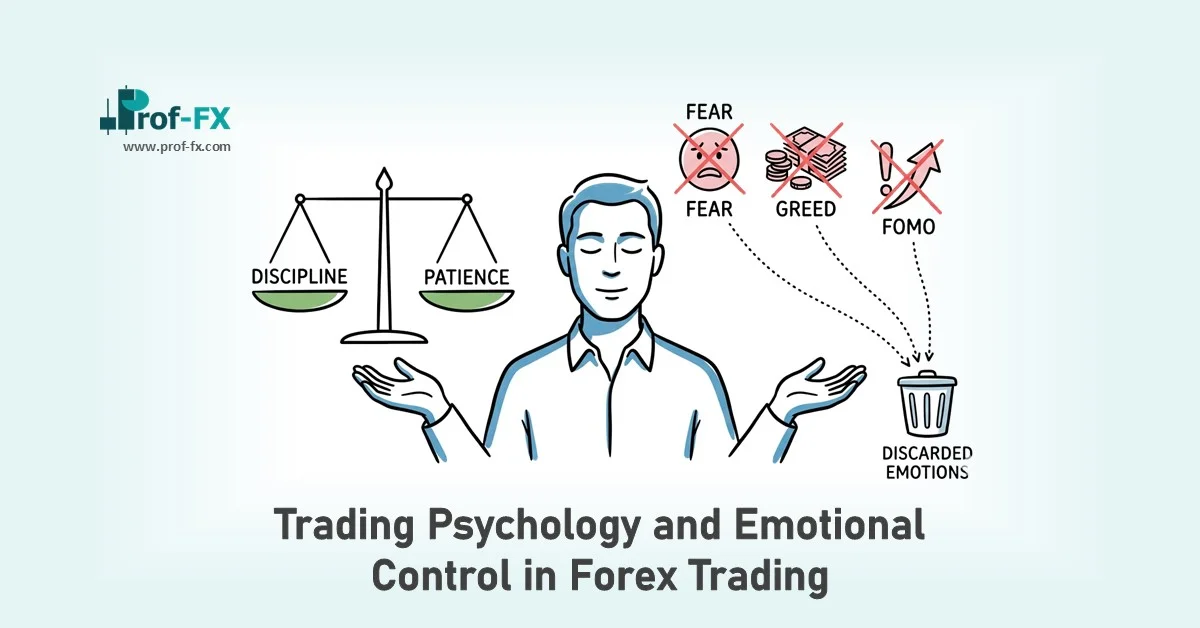
It is also important to recognize that greed rarely operates in isolation. It is frequently accompanied by fear, particularly the fear of missing out (FOMO) or the fear of realizing a loss. These emotional interactions amplify irrational behavior, making emotional control a foundational skill in trading.
How to Control Greed in Forex Trading
Although greed is a natural emotion, it can be effectively managed through discipline, structure, and consistent practice. Professional traders do not eliminate emotions – they build systems that prevent emotions from influencing execution.
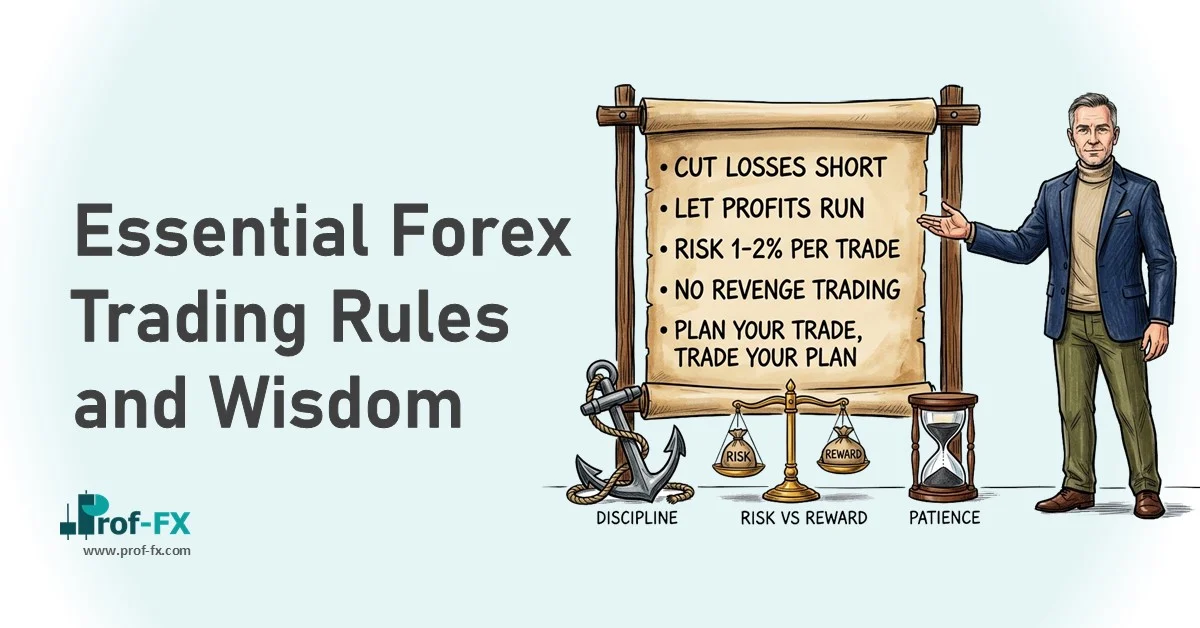
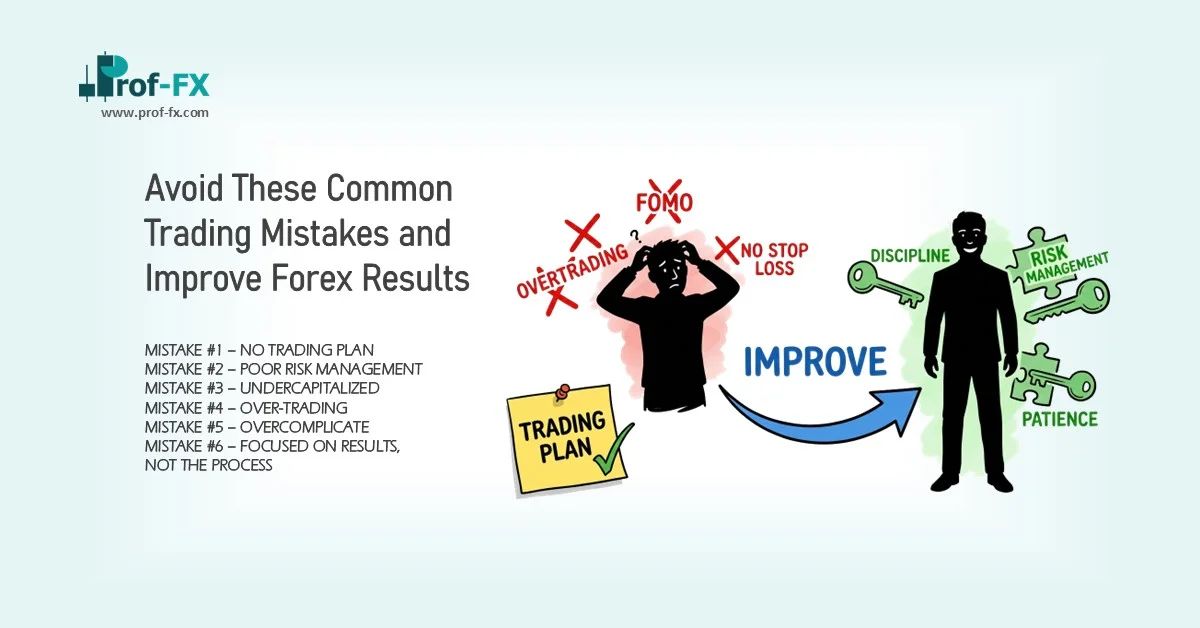
1. Develop and Follow a Trading Plan
A well-defined trading plan serves as a framework for decision-making. It outlines entry criteria, exit strategies, risk parameters, and position sizing rules. Traders who adhere strictly to a plan are significantly less likely to make impulsive, greed-driven decisions.
2. Maintain a Trading Journal
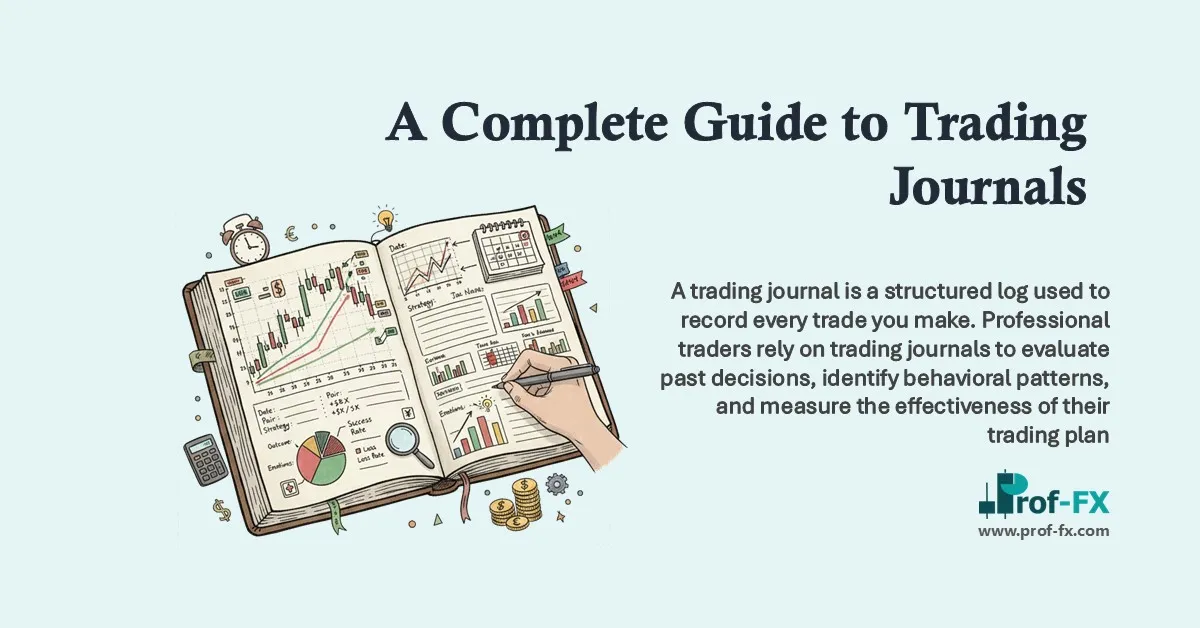
A trading journal provides accountability and performance tracking. By documenting every trade – including the rationale and emotional state – traders can identify patterns of greed and correct them systematically.
3. Apply Strict Risk Management (Stop Loss & Risk-to-Reward Ratio)
Implementing a stop loss on every trade is essential. Additionally, defining a favorable risk-to-reward ratio before entering a trade ensures that potential returns justify the risk taken.
Empirical observations across successful traders consistently highlight risk-to-reward discipline as one of the most critical determinants of long-term profitability.
4. Avoid Over-Leveraging
Using excessive leverage magnifies both gains and losses. Greed often leads traders to increase leverage in pursuit of higher returns, but this significantly raises the probability of rapid capital depletion. Controlled leverage is a hallmark of professional trading.
The Reality of Managing Greed
Controlling greed is not an overnight process. It requires continuous self-awareness, discipline, and adherence to structured trading practices. Traders must recognize that emotional mastery develops over time through experience and deliberate effort.
However, traders who actively acknowledge the risks of greed and integrate disciplined strategies into their trading routine position themselves for consistent improvement. In institutional trading environments, this level of discipline is not optional – it is a standard requirement.
Ultimately, “greed-free” trading is not about eliminating the desire for profit, but about ensuring that every trading decision is governed by logic, data, and a predefined strategy – not emotion.
Further Reading: Mastering Trading Psychology
To deepen your understanding of emotional control in trading, consider exploring the following topics:
- Techniques for managing trading emotions effectively
- Common myths surrounding trading psychology
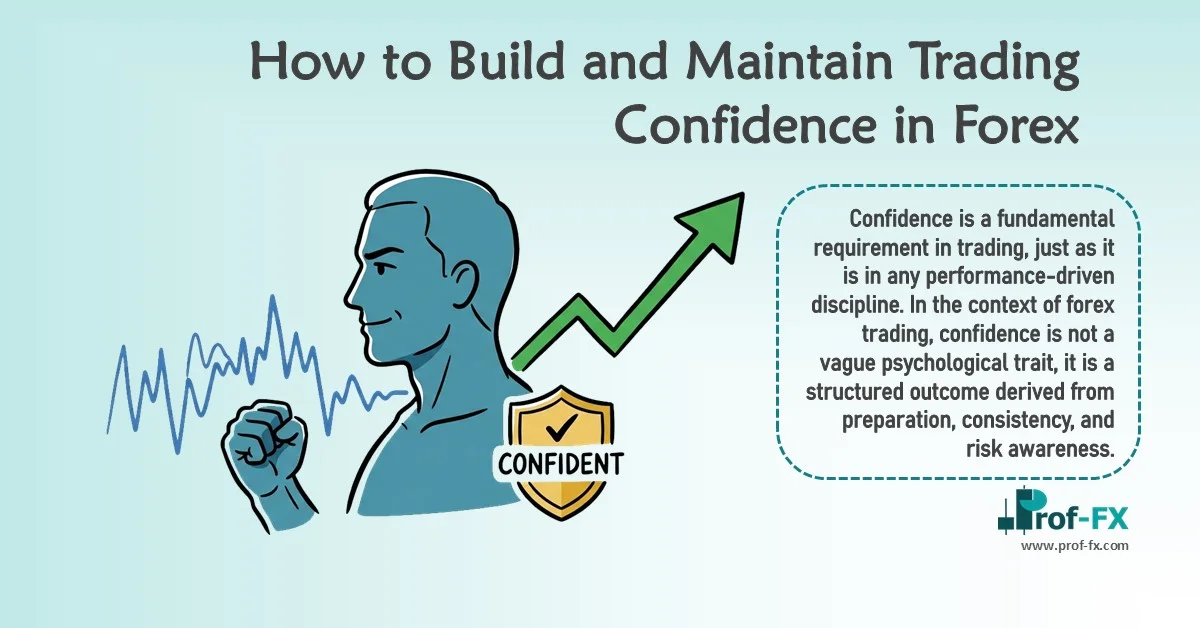
- Strategies to build confidence and maintain consistency in trading
Psychological discipline is a cornerstone of trading success. Traders who invest in developing emotional resilience gain a measurable advantage in navigating volatile market conditions.
Prof FX delivers in-depth forex news and technical analysis, focusing on the key drivers shaping global currency markets.