
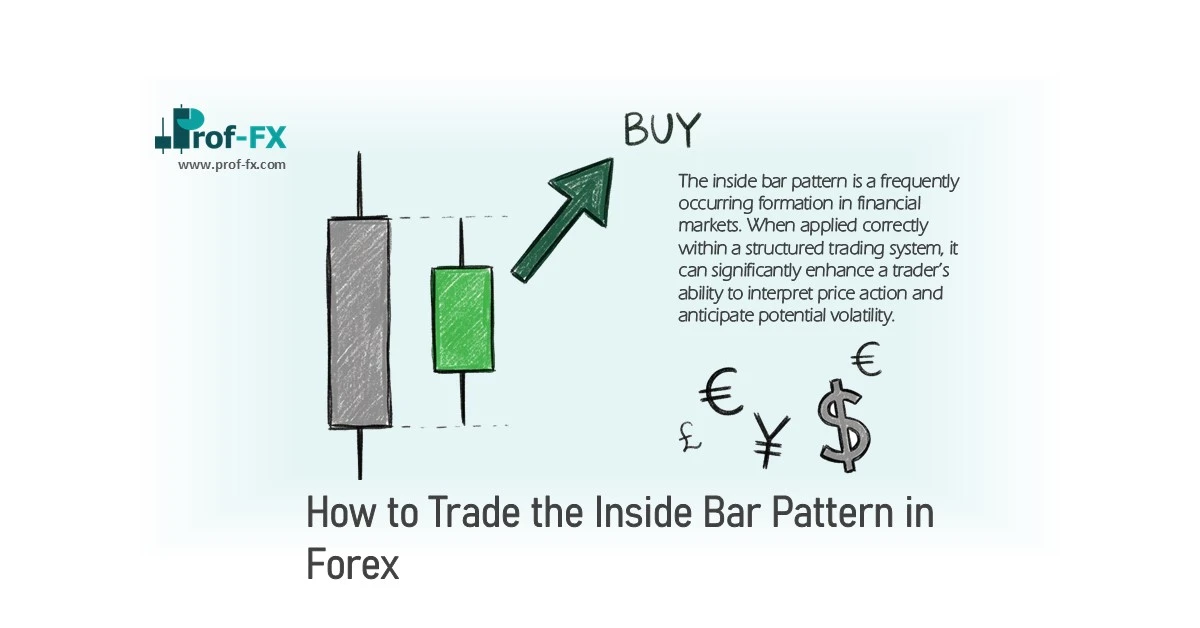
The inside bar pattern is a frequently occurring formation in financial markets. When applied correctly within a structured trading system, it can significantly enhance a trader’s ability to interpret price action and anticipate potential volatility.
What Is an Inside Bar?
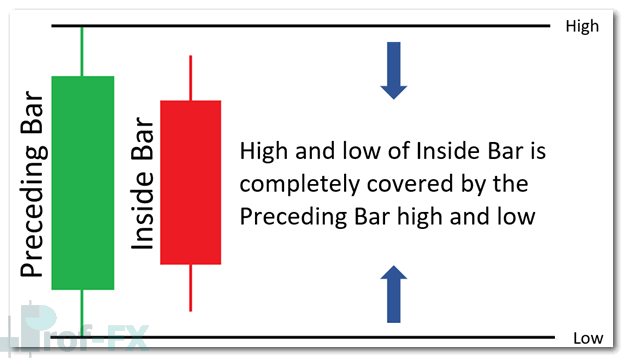
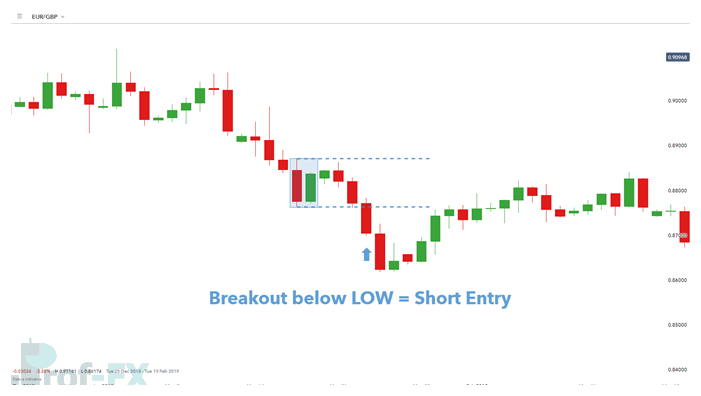
An inside bar is a two-candle formation that can signal either a continuation or reversal in price. It forms when the second candle (the “inside bar”) is completely contained within the high and low of the preceding candle (the “mother bar”).
This pattern reflects short-term market indecision. Price fails to break above or below the prior range, indicating a temporary pause in momentum before a potential expansion in volatility.
How to Identify an Inside Bar on Forex Charts
Identifying the inside bar pattern requires a structured approach:
- Establish a preceding trend using price action or technical indicators
- Locate a candle whose high and low are fully contained within the range of the previous candle
This formation visually represents consolidation within an existing trend or at a potential turning point.
Trading the Inside Bar Pattern: Key Strategies and Insights
The inside bar is often interpreted as a continuation pattern, but it can also precede reversals. Its true value lies in signaling a contraction in volatility that may be followed by a significant price expansion.
After a sustained upward or downward move, the formation of an inside bar reflects hesitation in the market. This pause can either:
- Lead to a continuation of the prevailing trend
- Trigger a reversal if momentum shifts
In many cases, traders use the inside bar for short-term trades or swing trading, typically holding positions for fewer than 10 candles.
From a professional perspective, the inside bar does not indicate direction, it indicates potential energy building in the market. The breakout that follows determines the trade bias.
Understanding Market Behavior Behind the Pattern
The inside bar highlights a critical market condition: participants are temporarily unwilling to push price higher or lower. This can occur due to:
- Anticipation of major economic news or reports
- A recent strong price movement causing hesitation among traders
Regardless of the cause, the implication is consistent a potential increase in volatility is likely. This creates opportunity, particularly for breakout-based strategies.
1) Inside Bar Breakout Strategy
The most widely used approach to trading inside bars is the breakout strategy.
Since the pattern represents consolidation within a trend, traders anticipate a breakout beyond the range of the mother bar:
- A break above the mother bar’s high → potential bullish (long) entry
- A break below the mother bar’s low → potential bearish (short) entry
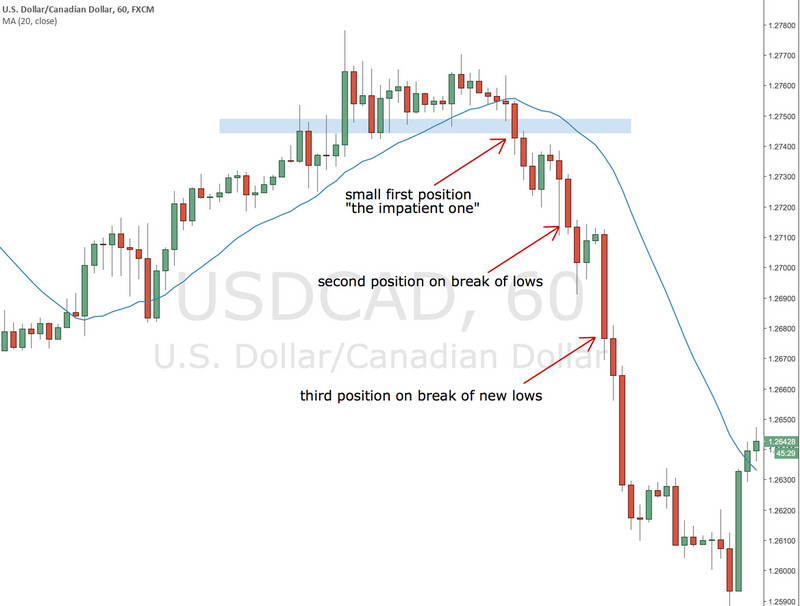
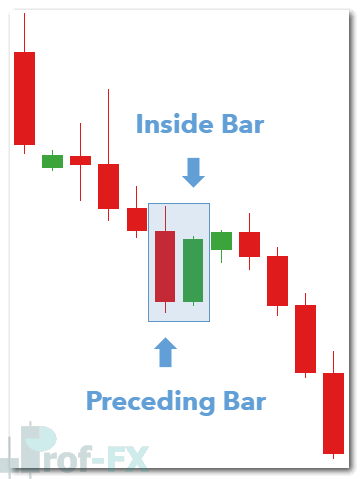
For example, in a downtrend characterized by lower highs and lower lows, a breakout below the mother bar’s low confirms bearish continuation and signals a short trade. Conversely, a breakout above the high may indicate a reversal, though this carries higher risk.
Risk Management and Trade Execution
Effective risk management is essential when trading inside bars:
- Stop Loss: Typically placed beyond the opposite side of the mother bar or recent swing high/low
- Take Profit: Often set at a multiple of the stop distance, commonly targeting a 1:2 risk-reward ratio
- Alternative Tools: Fibonacci extensions can be used to project profit targets
This structured approach ensures that trades maintain a positive expectancy over time.
Reliability of the Inside Bar Pattern
While the inside bar is a valuable signal, it is not inherently reliable when used in isolation. False breakouts are common, particularly in low-liquidity or ranging markets.
Therefore, professional traders treat the inside bar as:
- A trigger or confirmation tool, not a standalone strategy
- A component within a broader system that includes trend analysis, support and resistance, and risk management
Advantages and Limitations
Advantages:
- Frequently occurs across all financial markets
- Easy to identify, even for beginner traders
- Offers opportunities for favorable risk/reward setups
Limitations:
- Can signal both continuation and reversal, creating ambiguity
- Susceptible to false breakouts
- Requires confirmation from additional analysis tools
Expanding Your Candlestick Knowledge
To build a more comprehensive trading strategy, traders should combine the inside bar with other price patterns such as:
- Rising wedge
- Head and shoulders
- Double top and double bottom
- Cup and handle
Final Perspective
The inside bar pattern is best understood as a volatility compression signal rather than a directional indicator. Its effectiveness lies in identifying moments when the market is preparing for expansion.
Traders who integrate inside bars into a disciplined framework combining trend analysis, breakout confirmation, and strict risk management, gain a measurable advantage. Without this structure, reliance on the pattern alone exposes traders to unnecessary risk and inconsistency.
In professional trading, the inside bar is not a strategy by itself, but a high-value component within a broader, rule-based system.