
Breakout trading is one of the most dynamic and opportunity-rich approaches in technical analysis. While trends and ranges define most market behavior, the transition point between the two often creates the most explosive moves and this is where breakouts become critically important.
A breakout occurs when price escapes a consolidation structure and begins moving with fresh momentum, often driven by new information, shifting sentiment, or macroeconomic catalysts.
This guide provides a professional introduction to what breakouts are, how to identify them, and the key risks traders must manage when applying breakout strategies.
An Introduction to Breakout Trading
In market analysis, price generally exists in one of two dominant conditions:
- trending markets
- range-bound markets
However, the transition from a range into a trend creates a third critical condition:
- the breakout phase
This is the moment when price moves outside the boundaries of consolidation and begins establishing new highs or new lows.
From a technical perspective, this transition often marks the beginning of a new directional theme.
Breakouts are particularly attractive because they are often accompanied by:
- strong momentum
- volatility expansion
- accelerated price discovery
This is fundamentally driven by new information entering the market.
Whether the catalyst is technical, fundamental, or sentiment-based, buyers and sellers rapidly adjust prices to reflect that new reality.
This often results in aggressive directional moves.
However, there is one critical challenge:
- breakouts are inherently less predictable than trend continuation setups.
Because the trader is anticipating a new market condition to emerge, breakout trades are often statistically lower probability events.
That said, this does not make them unattractive. The major advantage lies in the asymmetric reward potential.
Even if a breakout strategy has a success rate of only 25–30%, it can still be profitable if:
- losses are tightly controlled
- winning trades are allowed to run
This is why breakout trading is fundamentally a risk-reward driven strategy.
What Is a Breakout?
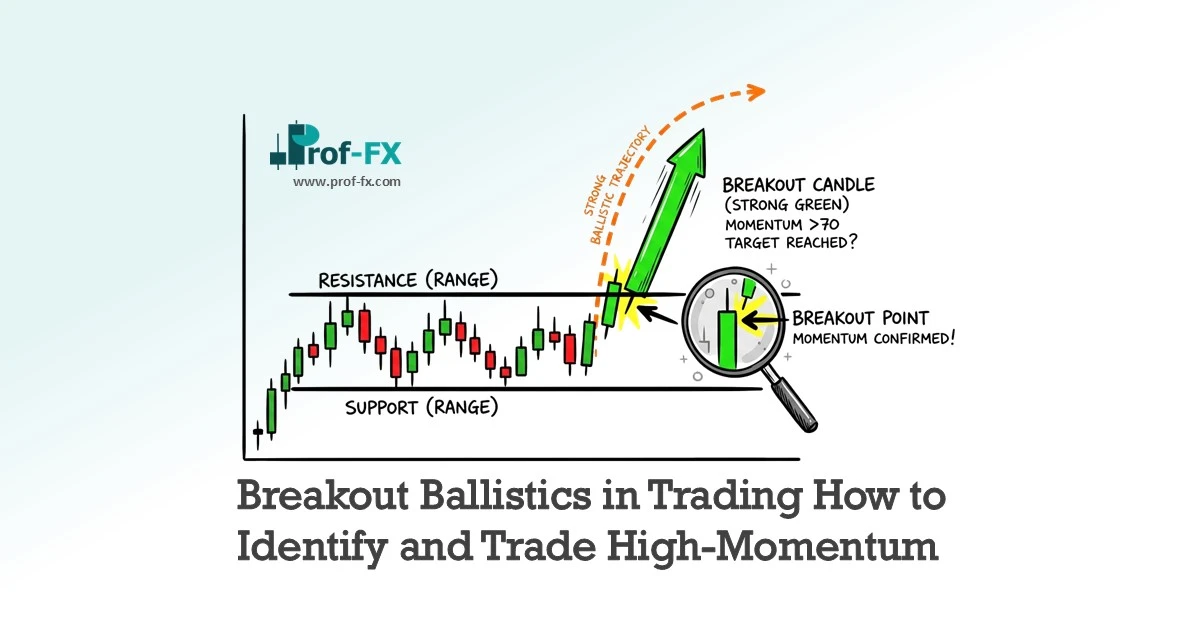
A breakout is simply a move to a new high or new low after a period of consolidation.
This consolidation may appear as:
- a range
- a rectangle
- a wedge
- a triangle
- sideways price action
Once price decisively moves beyond the established support or resistance level, the breakout is confirmed.
This principle applies across all timeframes.
Breakouts can occur on:
- 1-minute charts
- hourly charts
- daily charts
- weekly charts
However, due to increased market noise on lower timeframes, professional traders often focus on:
- 1-hour or higher for intraday trading
- daily or higher for swing and long-term setups
For example, on a USD/CHF daily chart, price may remain trapped between support and resistance for an extended period.
This reflects a state of equilibrium where buyers and sellers are balanced. Once price breaches the upper boundary, the initial breakout phase begins.
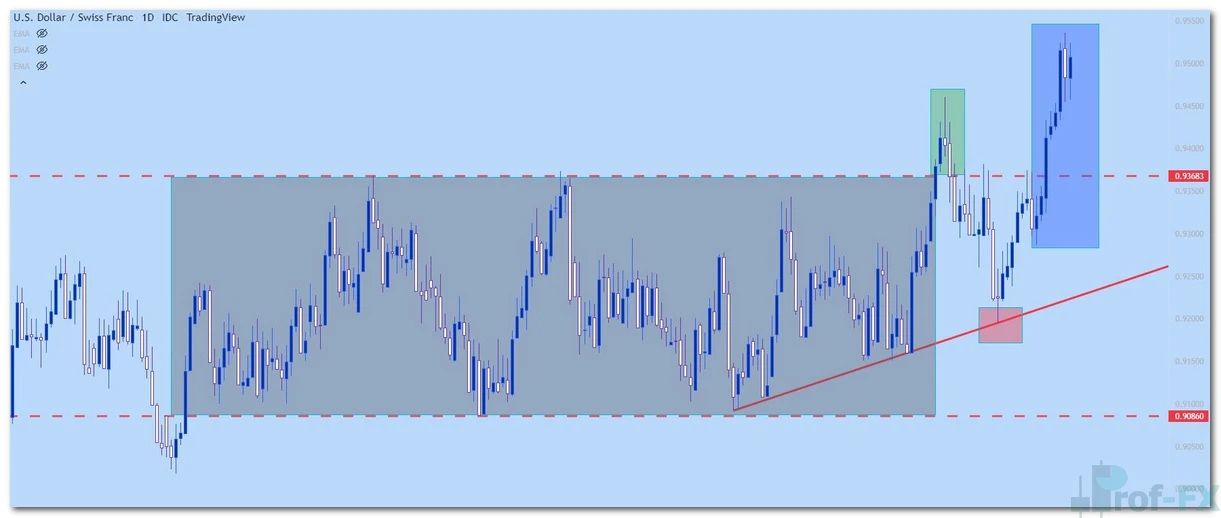
After the breakout, price may retest the previous range.
If this retest holds, it often creates an opportunity for trend-following continuation trades.
This is one of the most effective breakout trading frameworks.
How to Find Breakouts
Breakouts can be identified using either:
- price action
- technical indicators
Price action analysis is highly effective but more subjective.
For this reason, many traders prefer to use indicators to create a more objective framework.
Using ADX to Identify Potential Breakouts
One of the most useful indicators for locating breakout opportunities is the Average Directional Index (ADX).
ADX measures trend strength, not direction. This makes it particularly useful for detecting transitions from range-bound conditions into emerging trends. A common professional approach is to monitor periods when ADX remains below 30.
Low ADX values often indicate:
- low trend strength
- consolidation
- compressed volatility
These are the exact conditions that frequently precede breakout moves.
Once price breaks structure and ADX begins rising, it often confirms that a new trend is developing.
For example, on the USD/CHF daily chart, ADX may remain below 30 throughout the consolidation period and continue rising as the breakout unfolds.
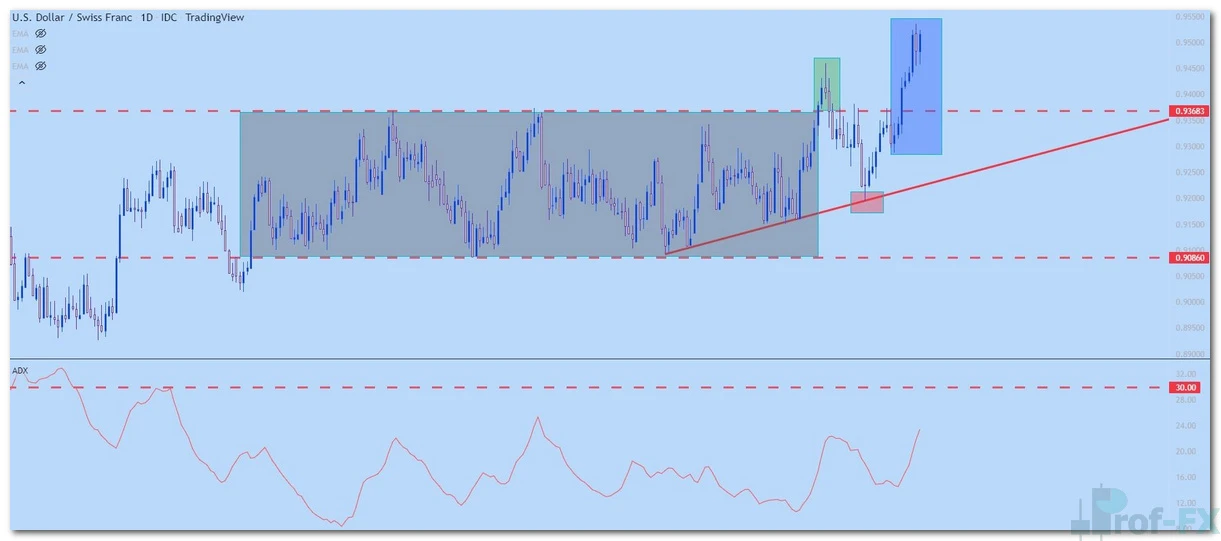
This objective framework helps traders avoid premature entries.
Why Breakouts Are So Powerful
Breakouts often generate some of the largest directional moves in the market.
This happens because price is moving into fresh territory, where fewer historical reference levels exist. When resistance breaks, buyers often accelerate positions. When support breaks, sellers may aggressively increase short exposure.
This creates momentum expansion.
In many cases, breakout trades offer excellent risk-to-reward ratios because:
- stop loss levels remain close to the breakout zone
- upside or downside targets may extend significantly
This is one of the main reasons breakout strategies remain highly popular among professional traders.
Breakouts Around News Events
One of the most important cautions in breakout trading involves major news releases.
This is especially relevant in:
Unlike equity markets, where earnings are often released outside regular sessions, forex and futures markets frequently experience major catalysts during active trading hours.
Examples include:
- central bank announcements
- inflation data
- employment reports
- GDP releases
- interest rate decisions
These events can trigger extremely sharp breakout moves. However, they also introduce significant risk.
During major news events, markets often experience:
- whipsaw price action
- false breakouts
- temporary breaches
- violent reversals
A breakout above resistance may fail within minutes once the market fully prices in the data. This is why news-driven breakouts can be particularly dangerous for inexperienced traders. Liquidity often declines because market makers reduce exposure. This can lead to wider spreads, slippage, and fast reversals.
For this reason, trading breakouts directly into news releases requires advanced execution discipline.
The Importance of the Economic Calendar
A professional breakout trader should always monitor the economic calendar.
This tool helps traders stay informed about:
- scheduled macroeconomic events
- expected release times
- forecasted impact levels
Using the calendar reduces the risk of entering trades immediately before major volatility spikes.
This is essential in forex breakout trading.
Trading Insight
The most important principle in breakout trading is this:
- breakouts offer lower win rates but potentially much larger rewards.
This means success depends less on prediction and more on risk management discipline.
Professional traders focus on:
- tight stop loss placement
- breakout confirmation candle closes
- retest entries
- ADX confirmation
- volume expansion
- avoiding major news traps
When executed correctly, breakout strategies can produce highly asymmetric returns.
Final Strategic Perspective
Breakouts represent the moment when the market transitions from equilibrium into price discovery mode. This is where some of the strongest trends begin. For traders who can control downside risk and remain patient for confirmation, breakout trading remains one of the most powerful technical approaches in forex and multi-asset markets.