The global forex market, with an average daily turnover exceeding $7.9 trillion, accommodates a wide range of trading styles, each requiring a distinct approach, mindset, and time commitment. From high-frequency execution to long-term strategic positioning, selecting a trading style that aligns with your personality and objectives is a critical factor in achieving consistent performance.
Understanding the core characteristics of each trader type allows market participants to operate more efficiently and apply appropriate risk management tools such as stop loss and take profit levels. Below are the six primary types of forex traders.
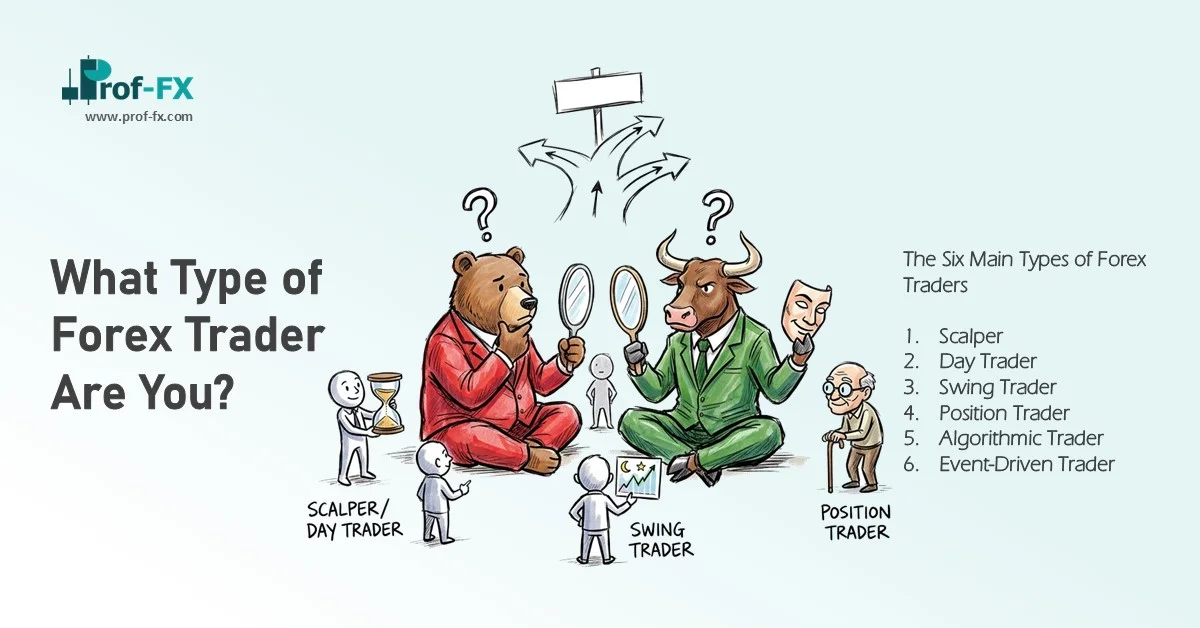
The Six Main Types of Forex Traders
1. Scalper
Scalpers operate on extremely short timeframes, holding positions for seconds to minutes. This approach, commonly referred to as forex scalping, involves executing a high volume of trades throughout the day to capture small price movements during periods of high liquidity.
This trading style demands rapid decision-making, strong focus, and the ability to react instantly to price fluctuations. Scalpers typically rely on tight spreads, fast execution, and precise timing to accumulate incremental gains.
From a professional standpoint, scalping is best suited for traders who are highly disciplined, resilient under pressure, and capable of maintaining consistent performance in fast-moving market conditions.
2. Day Trader
Day traders also operate within short-term timeframes but typically hold positions for minutes to hours, closing all trades before the end of the trading day. This eliminates exposure to overnight risk, including unexpected news events that may cause gaps in price.
Day trading requires adaptability to intraday volatility and a solid understanding of technical strategies such as breakout, retracement, and gap trading. Traders frequently analyze indicators like RSI, support, and resistance levels to identify entry and exit points.
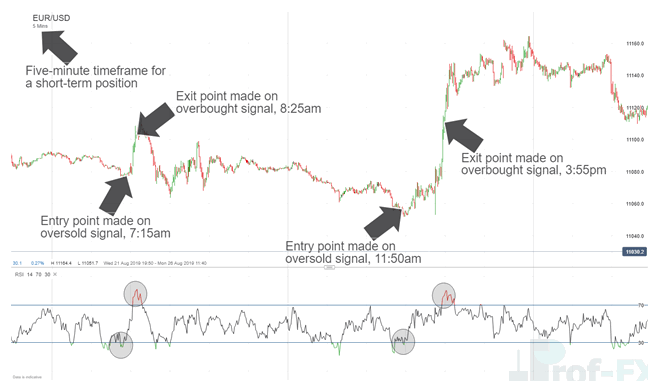
The example below illustrates a five-minute chart commonly used by scalpers and day traders, highlighting typical entry and exit signals based on RSI overbought and oversold conditions.
This style is most effective for traders who can maintain focus throughout the trading session and respond efficiently to rapid price changes.
3. Swing Trader
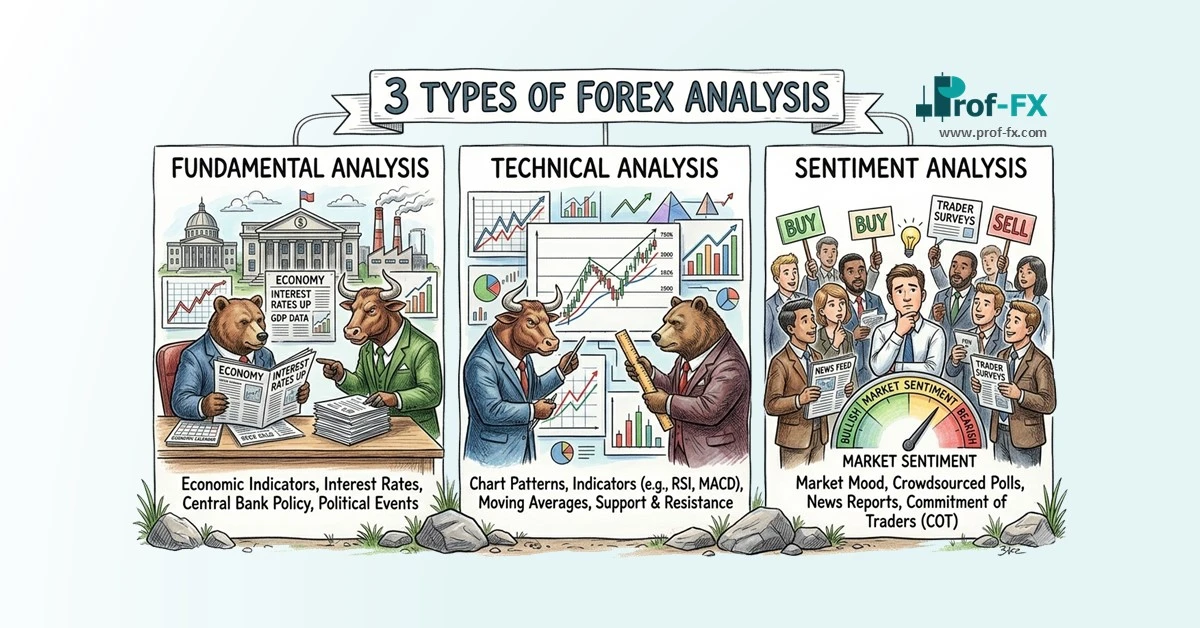
Swing traders hold positions for several days to a few weeks, aiming to capture medium-term price movements or “swings” within a broader trend. This approach primarily relies on technical analysis, although awareness of fundamental catalysts remains important due to their potential to trigger volatility.
Compared to shorter-term strategies, swing trading offers a more balanced pace, reducing the need for constant market monitoring. However, it still requires precision in identifying trend direction, key levels, and momentum shifts.
In practice, swing traders must demonstrate strong analytical skills and the ability to interpret chart patterns such as bullish and bearish formations effectively.
4. Position Trader
Position traders adopt a long-term perspective, holding trades for weeks, months, or even years. This strategy focuses on capturing major market trends rather than short-term price fluctuations.
As a result, position trading is heavily influenced by fundamental analysis, including macroeconomic indicators, interest rate cycles, and geopolitical developments. Technical analysis is still used, but primarily for optimizing entry and exit timing.
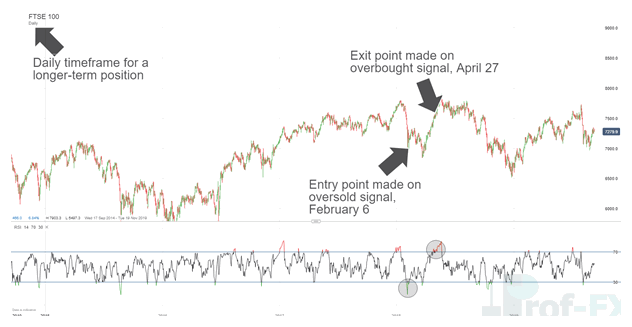
The chart below represents a typical daily timeframe used by position traders, showing a long-term trade setup and exit based on RSI signals.
This approach requires patience, capital discipline, and a comprehensive understanding of economic fundamentals. It is particularly suitable for traders who prefer a less time-intensive but highly strategic trading style.
5. Algorithmic Trader
Algorithmic traders utilize automated systems to execute trades based on predefined rules or advanced trading algorithms. These systems can be self-developed or acquired and are designed to identify opportunities and execute orders with speed and precision.
This method eliminates emotional bias and allows for consistent strategy implementation. High-frequency trading (HFT) is a specialized subset of algorithmic trading that operates at extremely high speeds.
Algorithmic trading is best suited for individuals with strong technical skills, including programming and data analysis, as well as a deep understanding of market structure and price behavior.
6. Event-Driven Trader
Event-driven traders base their decisions primarily on fundamental analysis rather than technical indicators. They seek to capitalize on volatility generated by major economic and political events such as Non-Farm Payroll (NFP), GDP releases, interest rate decisions, and elections.
This approach requires continuous monitoring of global news and the ability to interpret how macroeconomic developments influence currency markets. Price movements during such events can be rapid, often resulting in sharp bullish or bearish trends.
Professionally, this style is most appropriate for traders who are analytical, informed, and capable of reacting quickly to new information while managing increased volatility.
Can You Change Your Forex Trading Style?
Forex trading styles are not fixed. As market experience grows, traders often transition between strategies to better align with their evolving goals, risk tolerance, and lifestyle.
For example:
- A scalper may shift to position trading to reduce exposure to short-term volatility
- A swing trader may incorporate fundamental analysis to adopt an event-driven approach
This adaptability is not only common but necessary. Market conditions change, and the ability to refine or adjust your trading style is a key component of long-term success.
Final Perspective
Each trading style whether scalping, day trading, swing trading, position trading, algorithmic trading, or event-driven trading, offers distinct advantages and challenges. The most effective approach is one that aligns with your personality, time availability, and analytical strengths.
A structured and disciplined methodology, supported by proper risk management and continuous learning, provides the foundation for sustainable performance in the forex market.
Further Reading to Define Your Trading Approach
To refine your trading style and improve consistency, consider exploring:
- Maintaining a forex trading journal
- Developing and testing trading strategies
- Setting measurable trading goals
- Understanding the fundamentals of forex trading