
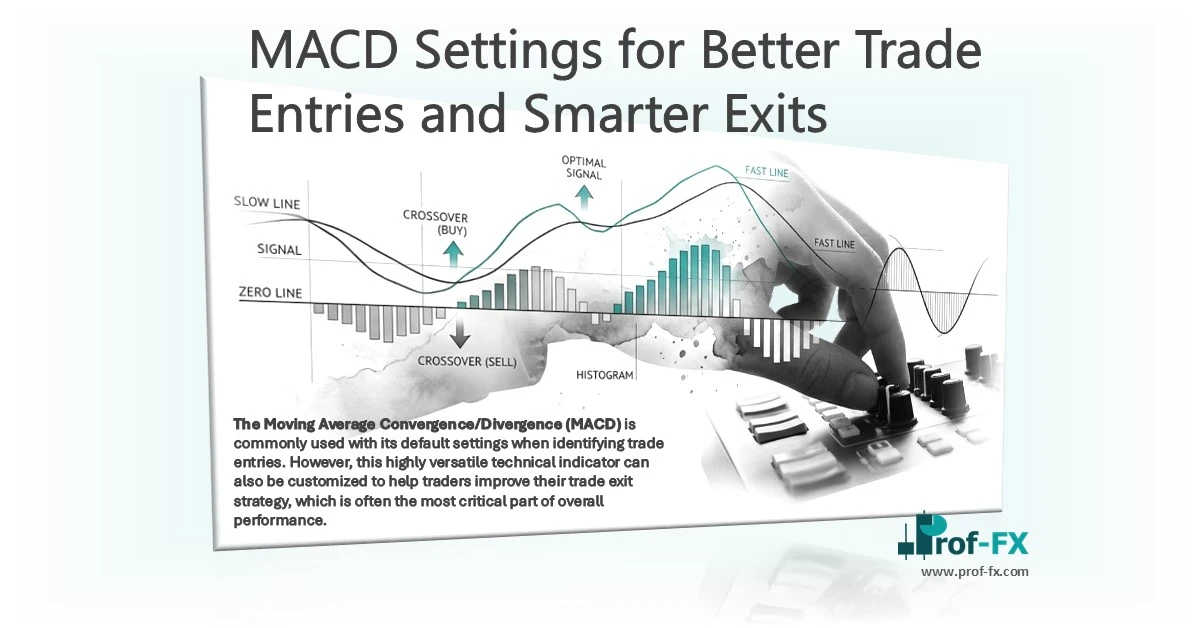
The Moving Average Convergence/Divergence (MACD) is commonly used with its default settings when identifying trade entries. However, this highly versatile technical indicator can also be customized to help traders improve their trade exit strategy, which is often the most critical part of overall performance.
This article provides a concise overview of the MACD, explains the standard MACD settings, and then expands on how modifying these settings can help traders manage exits more effectively.
Typical MACD Settings
The most widely used default MACD settings are:
(12, 26, 9)
These values refer to the following:
- (12) – the 12-period Exponential Moving Average (EMA), often called the fast line
- (26) – the 26-period EMA, known as the slow line
- (9) – the 9-period EMA of the MACD line, referred to as the signal line
Where:
MACD=fast line – slow line
and
Signal line=9-period EMA of the MACD
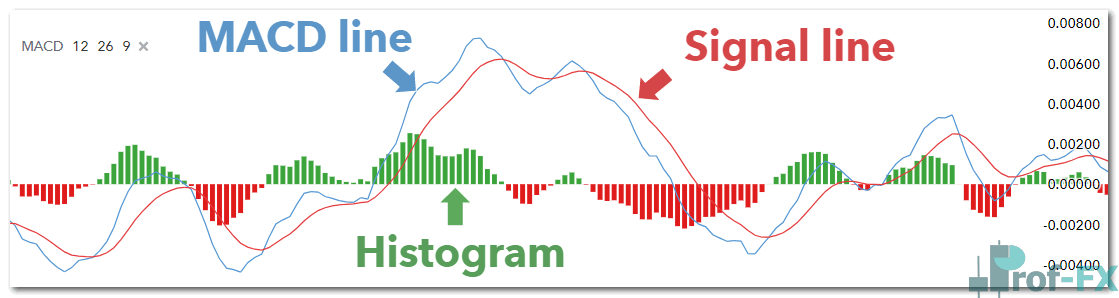
In essence, the fast line and slow line combine to form the MACD line, while the signal line is calculated as the 9-period EMA of that MACD value.
The histogram provides a visual representation of the relationship between these two lines:
- When the MACD is above the signal line, the histogram is typically shown in green
- When the MACD is below the signal line, it is generally shown in red
These settings are most commonly used by traders for trade entry timing.
However, a more important question from a professional trading perspective is: how should the MACD be used for exits?
If you are new to trading or simply need a refresher, reviewing a comprehensive MACD guide is strongly recommended before applying advanced settings.
How to Use Two MACDs with Different Settings for Better Exits
A common mistake among traders is spending a disproportionate amount of time optimizing entries while giving insufficient attention to exit strategy.
In reality, the exit is what ultimately determines:
- how much profit is secured from the market
- how much of your account equity is given back
From an expert trading standpoint, trade management and exit precision are often more important than the initial entry itself.
Traditional MACD exits
One straightforward approach is to use traditional MACD signals as exit triggers.
For example, traders may choose to exit when:
- the MACD crosses the zero line
- the MACD line crosses the signal line
These are the same signals commonly used for entries but adapted for trade closure.
While this method is simple, it has a major drawback.
In choppy or volatile markets, multiple MACD crossovers can occur in a short period, which may cause traders to exit too early or re-enter unnecessarily, leading to overtrading and reduced efficiency.
This is where a second MACD setting can significantly improve results.
Adding a second slower MACD for exits
The rationale for using two MACD indicators is highly practical:
- a faster MACD helps capture the beginning of a potential trend quickly
- a slower MACD helps keep the trader in the trend longer before exiting
This approach allows for better trend participation and helps reduce premature exits caused by short-term noise.
The recommended slower MACD settings are:
(19, 39, 9)
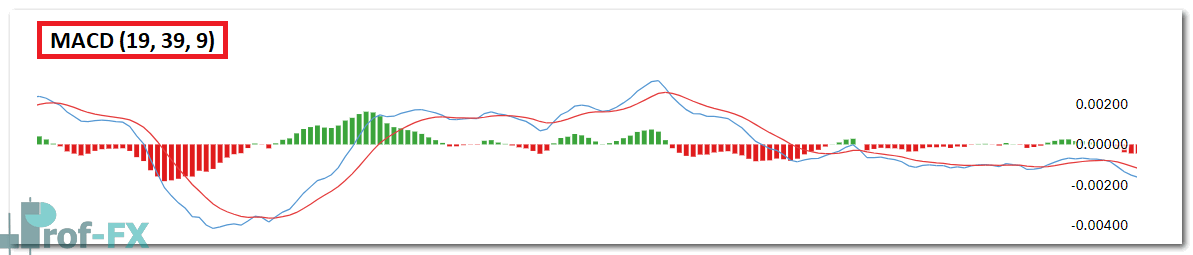
This slower configuration makes the indicator less sensitive to short-term fluctuations and helps smooth out market volatility.
Each MACD now has a distinct purpose:
Fast MACD – for entries
Settings: (12, 26, 9)
Used only for trade entries, specifically at the zero-line crossover
Slow MACD – for exits
Settings: (19, 39, 9)
Used only for trade exits, specifically when the MACD line crosses the signal line
This framework can be summarized as follows:
| Criteria | MACD settings | Signal |
| Entry criteria | Fast MACD (12, 26, 9) | Zero-line crossover |
| Exit criteria | Slow MACD (19, 39, 9) | MACD / signal line crossover |
This dual-MACD approach creates a more structured and disciplined trading process.
It becomes easier to separate entry logic from exit logic, which is one of the hallmarks of professional system-based trading.
The CAD/CHF chart below clearly illustrates how the two MACDs work together to generate both entries and exits.
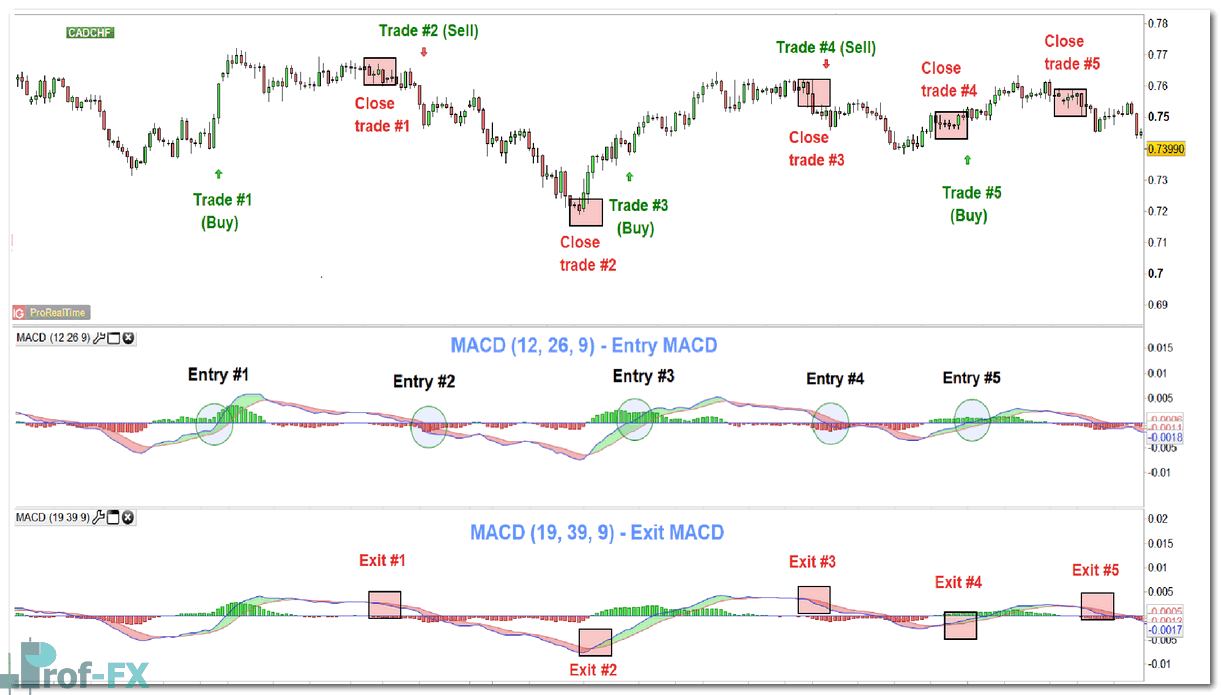
The reason the entry and exit rules are intentionally different is to help traders stay in the direction of the dominant trend for longer, rather than being forced out by temporary pullbacks or minor volatility spikes.
This method is particularly effective for trend-following strategies.
MACD Settings FAQ
Under which market conditions should traders consider using a slower MACD setting?
Slower MACD settings can be extremely useful when trading high-volatility currency pairs.
Examples include:
- NZD/ZAR
- GBP/AUD
- CAD/JPY
These markets are often characterized by wider ranges, larger price swings, and increased risk of false crossover signals.
Applying a slower MACD helps smooth out this volatility and reduces the likelihood of reacting to short-term market noise.
This makes the signals more reliable.
Slower MACD settings are especially useful for GBP crosses, as these pairs are naturally more volatile and often require larger margin requirements than many other currency pairs when trading the same contract size.
From an authoritative trading perspective, using a slower MACD in volatile markets is not merely a preference, it is often a more statistically sound method for improving trade management and reducing false exits.