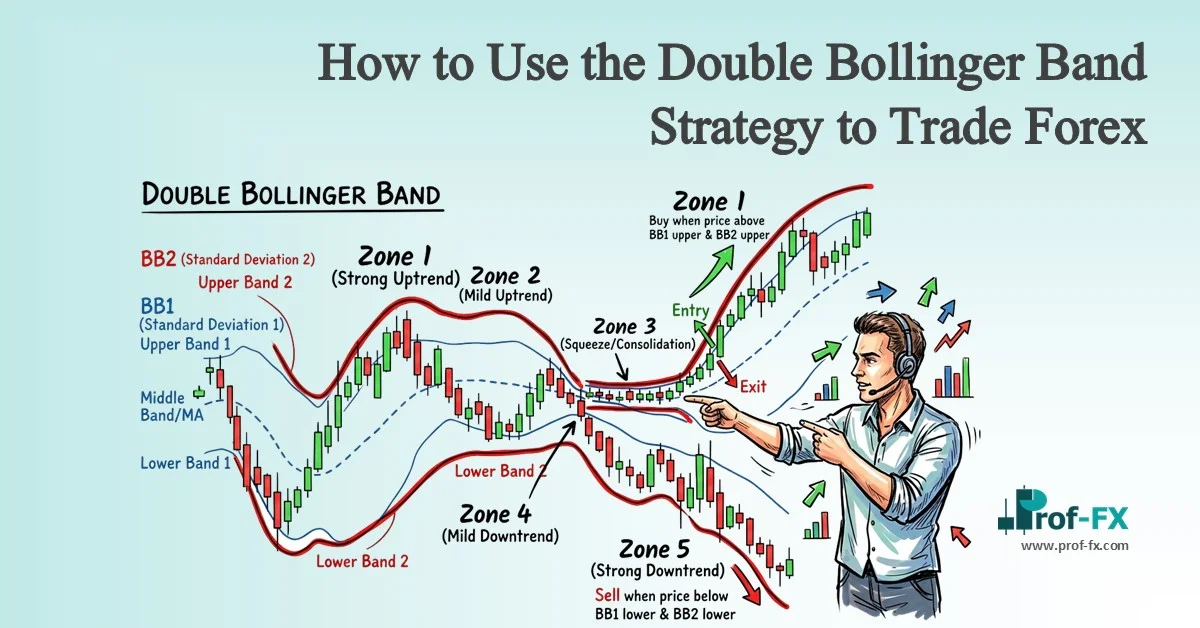

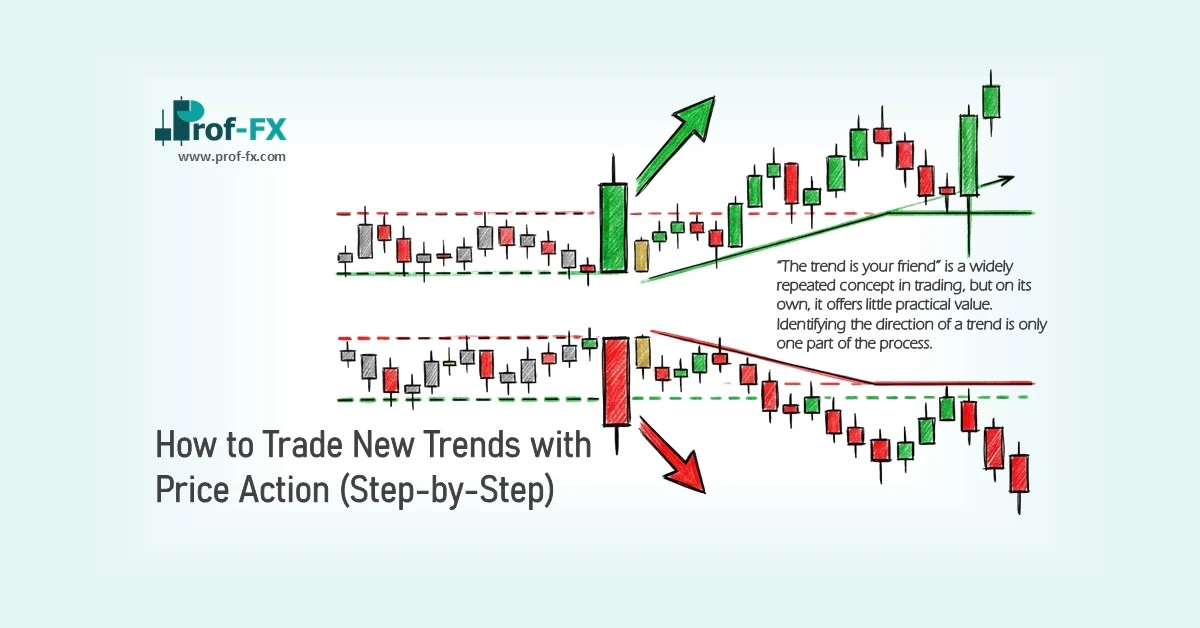
“The trend is your friend” is a widely repeated concept in trading, but on its own, it offers little practical value. Identifying the direction of a trend is only one part of the process. Execution, specifically timing, entry precision, and risk control is what ultimately determines trading outcomes.
To effectively trade new or emerging trends using price action, traders must combine structure, patience, and disciplined risk management. The following five-step framework provides a clear and professional approach to doing so.
1. Understand and Align Time Frames
One of the most common questions among traders is which time frame is “best.” In reality, there is no universally superior time frame. Each represents a different perspective of the same market.
Short-term charts provide detailed, granular price movements but are often noisy. Longer-term charts offer clearer structure but fewer actionable signals. The objective, therefore, is balance.
Multiple time frame analysis allows traders to:
- Identify the broader trend on higher time frames
- Refine entries using lower time frames
A structured approach is as follows:
| Trader Style | Holding Period | Trend Chart | Entry Chart |
| Long-Term | 1 week+ | Weekly | Daily |
| Swing Trader | Days to weeks | Daily | 4-hour |
| Short-Term | Hours to days | 4-hour | 1-hour |
| Day Trader/Scalper | Minutes to hours | 1-hour | 15-minute |
This alignment ensures consistency between the broader trend and entry timing, reducing unnecessary noise while maintaining precision.
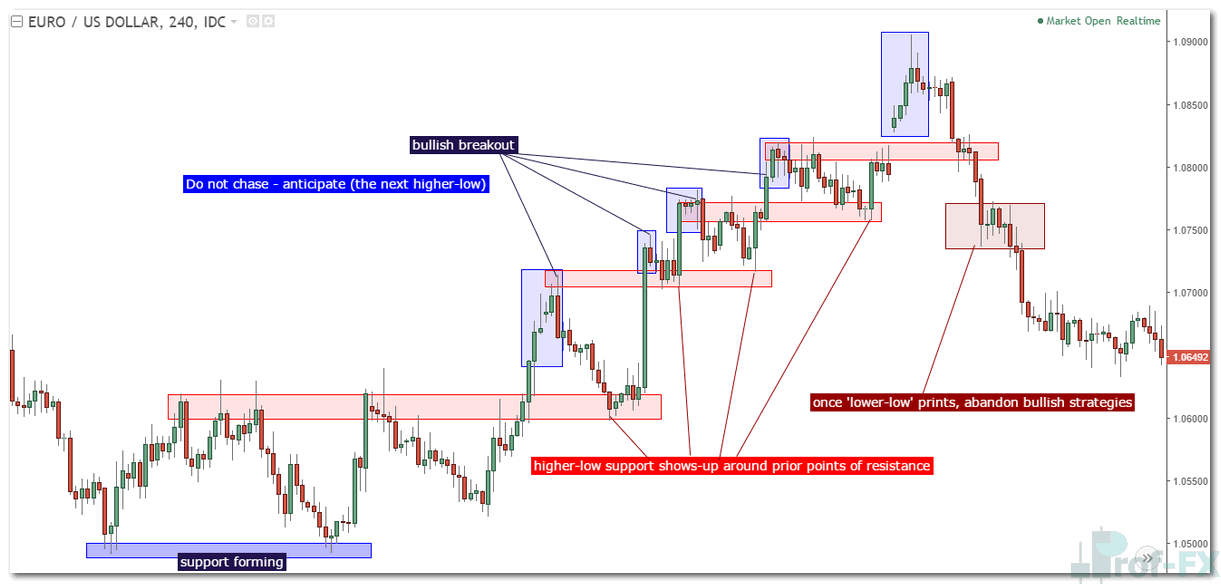
2. Avoid Chasing Breakouts
Breakouts often appear to be the most attractive trading opportunities, but they are also among the most dangerous. By definition, a breakout represents a new market condition, meaning there is limited recent data to guide decision-making.
Entering immediately after price breaks above resistance or below support frequently leads to poor positioning. Even if the directional bias is correct, price often retraces before continuing, putting early entries under pressure.
Instead, treat the breakout as a signal, not an entry. It confirms strength (in bullish scenarios) or weakness (in bearish scenarios), but patience is required before acting.
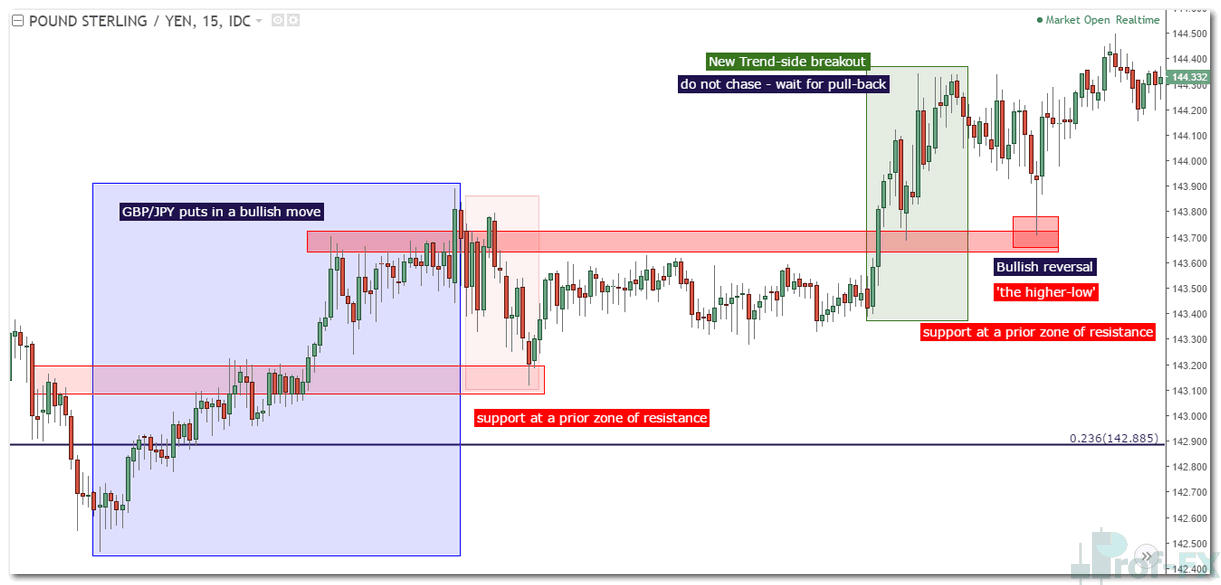
3. Wait for Support to Form at Prior Resistance
After a breakout occurs, the previous resistance level often transforms into support in an uptrend (and vice versa in a downtrend). This is a fundamental principle of price action.
Rather than entering during the breakout, traders should:
- Allow price to establish a new higher-high
- Wait for a pullback
- Observe whether price finds support near the former resistance
This pullback creates the next higher-low, which is a far more favorable entry point.
This behavior reflects a shift in market structure, where previous sellers are replaced by buyers defending the same level.
4. Use Lower Time Frames for Entry Confirmation
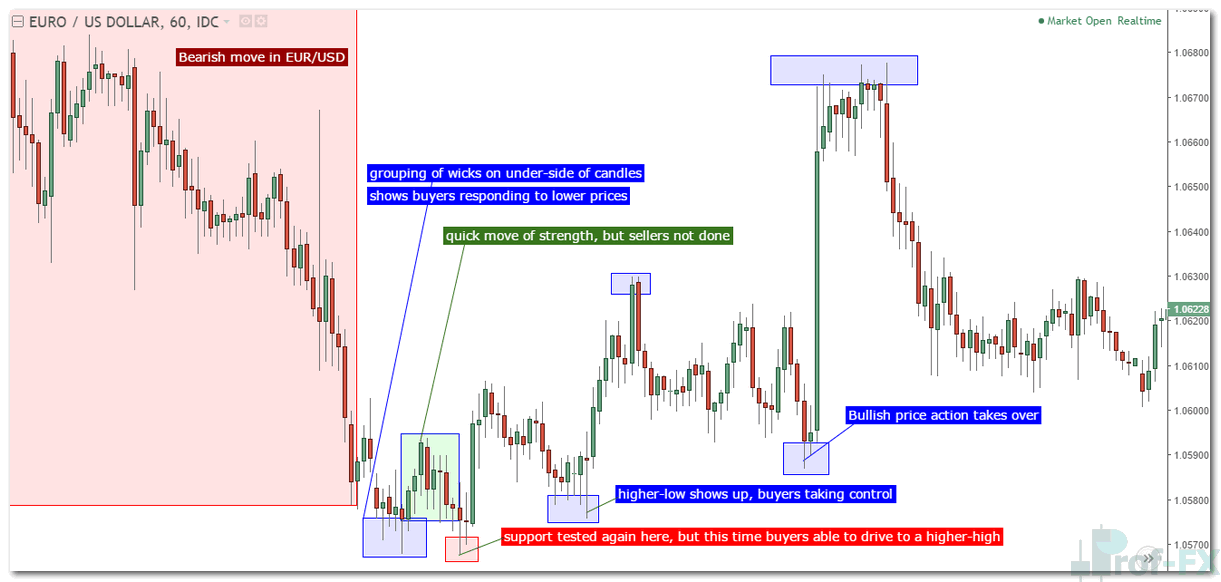
Once price approaches the potential support zone, lower time frames become valuable for refining entry timing.
Traders should look for:
- Slowing downside momentum
- Formation of bullish wicks (indicating rejection of lower prices)
- Gradual shift from selling pressure to buying pressure
These signs suggest that demand is beginning to outweigh supply.
As buyers regain control, price typically starts to move higher on the lower time frame. This is the stage where traders can consider entering in the direction of the trend.
Importantly, the recently established support identified through wick rejection, also provides a logical area for placing a stop loss.
5. Define Risk and Execute Discipline
Risk management is a non-negotiable component of professional trading. Once a setup is identified, a stop loss must be placed immediately or shortly after entry.
However, stops should not be placed at obvious levels, such as exact swing highs or lows. These areas are frequently targeted by market participants seeking liquidity.
Instead:
- Place stops slightly beyond key levels (e.g., below psychological levels or beyond recent structure)
- Allow a small buffer (“wiggle room”) to avoid premature exits
For example, if a swing low forms at 112.03, placing a stop exactly at that level increases the likelihood of being stopped out unnecessarily. A more strategic approach would be placing the stop below 112.00.
Equally important is discipline after entry. If the stop is approached or hit:
- Do not widen the stop in an attempt to stay in the trade
- Accept the loss and preserve capital
This prevents the common mistake of “throwing good money after bad,” which can quickly erode trading equity.
Key Takeaway
Trading new trends with price action requires more than identifying direction. It demands a structured process that integrates confirmation, patience, and risk control.
From a professional standpoint:
- Breakouts signal opportunity, not immediate action
- Pullbacks provide optimal entry conditions
- Lower time frames refine timing
- Risk management preserves long-term performance
By consistently applying this framework, traders position themselves to participate in emerging trends with greater precision, reduced risk, and improved consistency.