

Why “The Trend Is Your Friend” Still Matters in Forex Trading
One of the most enduring expressions in forex trading is “The trend is your friend.” This phrase has survived decades of market evolution for one simple reason: it reflects a core truth about how financial markets move. Price trends are not random; they represent collective market behavior driven by institutional flows, macroeconomic forces, and trader sentiment.
In this article, I will explain how traders—especially beginners—can identify trends using price charts and basic technical analysis, and more importantly, how to trade in harmony with them rather than against them.
Why Trend Trading Is Favored by Experienced Traders
Before diving into chart analysis, it is important to understand why trend trading remains one of the most popular and effective approaches among both novice and professional forex traders.
Experienced traders understand that when a strong trend is present, trading becomes structurally easier. When price consistently moves in one direction, traders do not need to predict every short-term fluctuation. Instead, they focus on aligning themselves with the broader market momentum.
This is why professional traders constantly scan the forex market for strong, clearly defined trends. Once identified, these trends can be traded repeatedly, allowing traders to capitalize on sustained directional movement rather than short-lived price noise.
Trading With the Trend Simplifies Decision-Making
When a market is trending strongly upward, the specific entry strategy becomes less critical. The priority is simple: look for buying opportunities. The same logic applies to a strong downtrend, where selling opportunities dominate.
By trading in the direction of the prevailing trend, the rest of the trading plan naturally aligns. Risk management, trade timing, and even emotional discipline become easier to manage. This does not mean that every trade will be profitable. However, it does mean that traders do not need perfect entries or exits to remain consistently profitable.
Trend alignment allows margin for error—something every trader benefits from, especially in volatile forex markets.
Why Trends Offer More Pip Potential
Another key advantage of trend trading is pip efficiency. Historically, markets tend to travel farther in the direction of the dominant trend than they do against it.
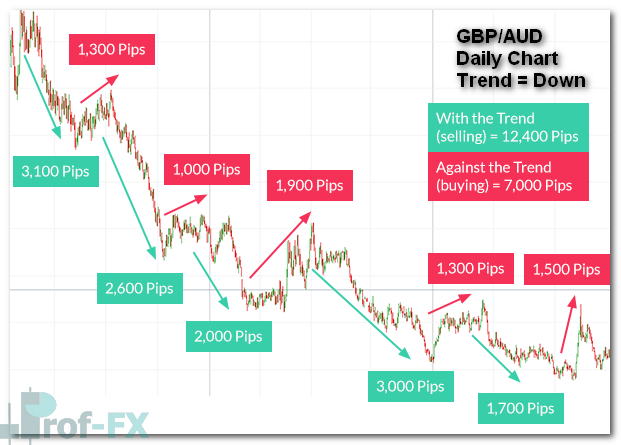
In the chart above, notice how the downside move offers significantly more pip potential than the corrective moves to the upside. By aligning trades with the dominant trend, traders position themselves alongside market momentum rather than fighting it.
This momentum is often fueled by institutional traders, hedge funds, central bank expectations, and macroeconomic data, making it far more powerful than short-term countertrend moves.
How to Identify the Market Trend Using Price Charts
To determine the trend, begin by opening a price chart of your chosen currency pair. Ideally, display 100 to 200 candles on your chart to gain sufficient market context.
Ask a simple but critical question:
In which direction is price generally moving?
This single question forms the foundation of all trend analysis.
Identifying a Valid Uptrend
An uptrend is confirmed when price forms a consistent sequence of higher highs and higher lows. This structure reflects increasing buying pressure and sustained bullish sentiment.
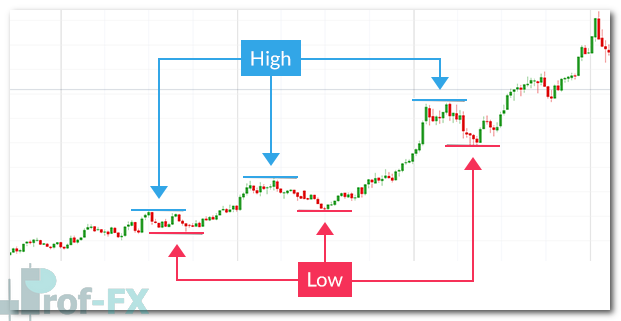
As long as price continues to respect this structure, the uptrend remains valid. Traders should focus primarily on long (buy) opportunities while the pattern holds.
When an Uptrend Turns Into a Downtrend
No trend lasts forever. An uptrend officially transitions into a downtrend when price begins to form lower highs and lower lows, signaling a shift in market control from buyers to sellers.
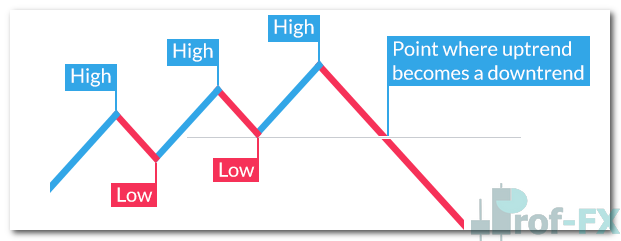
This structural change often coincides with shifts in fundamental drivers, such as changes in interest rate expectations, economic data surprises, or shifts in risk sentiment.
Confirming a Downtrend on the Chart
A downtrend is identified by a clear sequence of lower highs and lower lows. This structure reflects sustained selling pressure and bearish momentum.
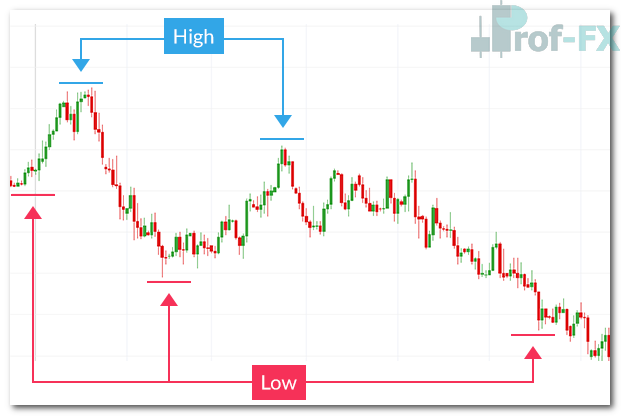
In a valid downtrend, traders should prioritize short (sell) setups and avoid looking for long trades unless there is clear evidence of trend reversal.
How a Downtrend Transitions Into an Uptrend
Just as uptrends end, downtrends eventually reverse. The first sign of a trend shift occurs when price starts forming higher highs and higher lows, indicating renewed buying strength.
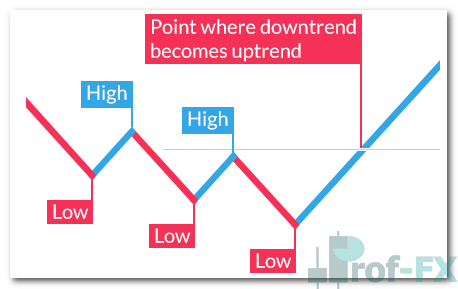
Recognizing these transitions early can help traders adjust their bias before the broader market consensus changes.
There Are No Perfect Rules for Highs and Lows
It is important to understand that trend identification is not an exact science. There are no rigid rules defining which highs or lows must be used.
The goal is to focus on the most obvious and visually clear trend structures. Avoid overanalyzing minor price fluctuations. Instead, concentrate on major swings that clearly define market direction.
If the Trend Is Not Obvious, Move On
A powerful rule used by professional traders is simple:
Only trade trends that are so clear a 10-year-old could identify them from across the room.
If you find yourself unsure about the trend direction, do not force a trade. Move on to another currency pair. One of the greatest advantages of the forex market is choice—there are dozens of currency pairs available at any time.
Why Forex Traders Have an Advantage
Unlike stocks or commodities, the FX market offers over 30 actively traded currency pairs, influenced by global central banks, macroeconomic cycles, and international capital flows.
This diversity allows traders to select only the strongest trends, rather than forcing trades in weak or choppy markets.
Summary: Why Trading With the Trend Works
Trading strong trends offers several key advantages, which is why it remains a preferred strategy among professional and institutional traders.
Focus on identifying the clearest and strongest trending markets. With so many currency pairs available, there is no reason to trade unclear or sideways price action.
Finally, always filter your trading signals in the direction of the trend. Take entries that align with market momentum and ignore countertrend signals. Over time, this discipline alone can significantly improve trading consistency.