Understanding Trading Psychology Beyond the Basics
Trading psychology is one of the most underestimated aspects of forex trading, yet it remains a defining factor that separates consistently profitable traders from those who struggle to survive in the markets. While strategies, technical indicators, and economic data are essential, they become ineffective without emotional discipline and psychological control.
At Prof FX, traders gain exposure not only to market analysis but also to the psychological realities of trading. Our analysts have already navigated years of emotional highs and lows across volatile market cycles, allowing you to learn from experience rather than costly trial and error.
In this guide, you will gain a deeper understanding of:
- What trading psychology really means
- How to develop the mindset of a successful trader
- The foundational elements of trading psychology
- Practical tools and techniques to strengthen emotional control
For additional insights into real-world trading behavior, explore our “Day in the Life of a Trader” video series, where professional routines and psychological discipline are on full display.
What Is Trading Psychology in Forex Markets?
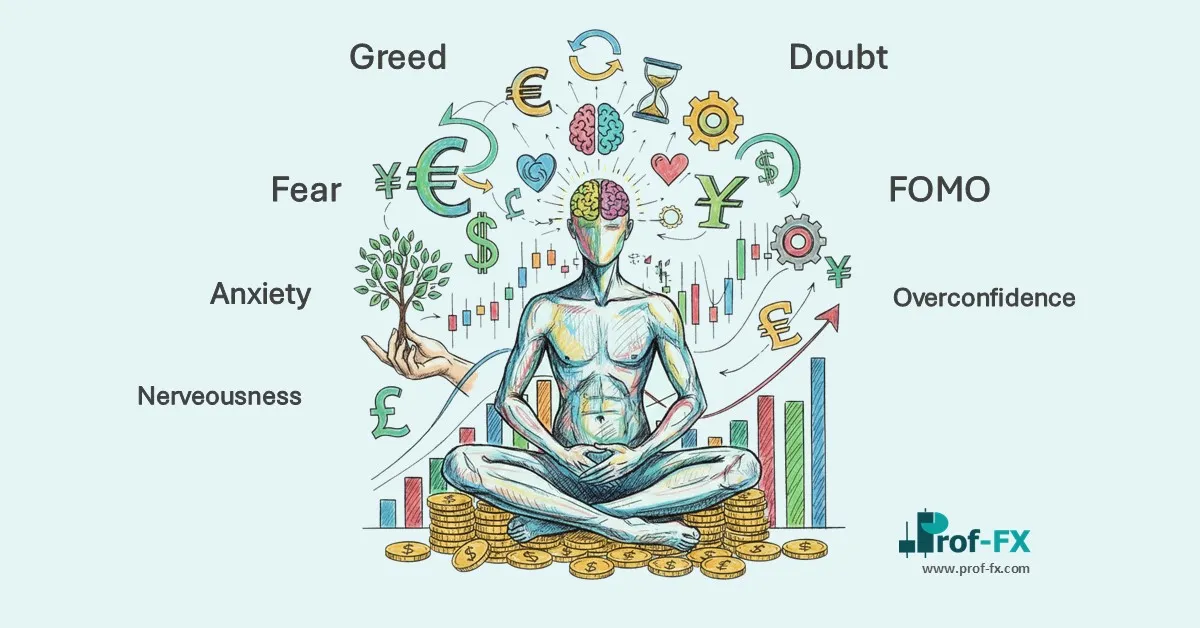
Trading psychology refers to the full range of emotions, mental biases, and behavioral patterns that traders experience while participating in financial markets. These emotional responses influence decision-making, often subconsciously, especially during periods of high volatility.
Certain emotions – such as patience, discipline, and confidence – can positively support decision-making. Others, including fear, greed, anxiety, nervousness, and frustration, must be actively managed. The psychology of trading is not something that can be mastered overnight; it evolves through experience, self-awareness, and structured discipline.
In practice, most traders encounter the negative effects of trading psychology more frequently than the positive ones. This often manifests in behaviors such as closing losing trades too early out of fear, or increasing position size on losing trades as fear transforms into greed.
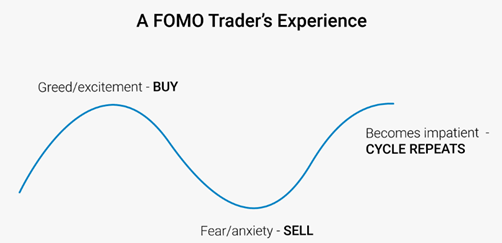
One particularly dangerous psychological phenomenon is Fear of Missing Out (FOMO). Strong directional moves or parabolic price rallies can pressure traders into entering trades after the optimal entry has already passed. When the market inevitably retraces or reverses, emotional stress intensifies, often leading to impulsive decisions and unnecessary losses.
Traders who successfully harness positive psychological traits – while keeping destructive emotions under control – are far better equipped to handle market uncertainty, volatility, and long-term consistency.
The Core Foundations of Trading Psychology
Managing Emotional Reactions in Trading
Every trader, regardless of experience level, encounters emotions such as fear, greed, excitement, overconfidence, and hesitation. The ability to manage these emotional responses often determines whether a trading account grows steadily or collapses under pressure.
Effective emotional management allows traders to remain objective, follow their trading plan, and avoid impulsive decisions driven by short-term outcomes rather than long-term probability.
Understanding and Controlling FOMO
FOMO is one of the most common emotional traps in forex trading. Traders must learn to recognize this emotion early and consciously suppress it. While this is challenging, it is essential to remember that market opportunities are endless.
A disciplined trader understands that capital preservation comes first and only trades with funds they can afford to lose, reducing emotional pressure and impulsive behavior.
Avoiding Common Trading Mistakes
Mistakes are inevitable in trading, even among seasoned professionals. However, understanding the logic behind these mistakes can prevent them from compounding into larger problems.
Some of the most common trading errors include overtrading multiple markets, inconsistent position sizing, and excessive leverage. When these mistakes are repeated without reflection, they can quickly undermine both psychological stability and account performance.
Overcoming Greed in Forex Trading
Greed is one of the most destructive emotions in financial markets and deserves particular attention. When greed overrides rational thinking, traders may double down on losing positions or increase leverage in an attempt to recover losses quickly.
Although controlling greed is easier said than done, traders must understand that sustainable success comes from discipline, not emotional reactions. Long-term profitability depends on consistency rather than emotional highs.
The Importance of Consistent Trading Behavior
New traders often feel compelled to trade every opportunity they see, regardless of market conditions or asset class. This behavior leads to inconsistent results due to the unique characteristics and volatility profiles of different markets.
Without a well-defined trading strategy focused on a limited number of instruments, traders are unlikely to achieve stable performance. Consistency in execution is just as important as strategy design.
“Trade according to your strategy, not your feelings.”
— Calvin Bennett, Junior Analyst
Debunking Common Forex Trading Myths
Traders are frequently influenced by misconceptions circulating within the trading community. Popular myths include the belief that traders need a large account to succeed or that profitability requires winning most trades.
These assumptions often become psychological barriers that prevent traders from developing realistic expectations. In reality, consistent profitability depends on risk-to-reward ratios, discipline, and effective risk management – not perfection.
Our analysts provide clarity by addressing common forex trading truths and misconceptions, helping traders build a more grounded and realistic mindset.
Why Risk Management Strengthens Trading Psychology
Risk management is one of the most powerful psychological tools available to traders. Defining entry levels, profit targets, and stop losses before entering a trade provides emotional clarity and reduces uncertainty.
Position sizing plays a critical role as well. Trading with appropriate size limits emotional exposure and allows traders to remain calm even during losing streaks.
“One of the easiest ways to reduce the emotional impact of your trades is to lower your position size.”
— Martin Thomas, Prof FX Currency Strategist
How to Develop the Mindset of a Successful Trader
While every professional trader has a unique approach, several psychological principles consistently appear across successful trading careers.
Maintain a Positive Market Outlook
Approaching the markets with a constructive mindset is difficult, particularly after consecutive losses. However, a positive attitude helps prevent negative thought patterns from interfering with future trade execution.
Set Aside Ego and Accept Losses
Losses are an unavoidable part of trading. Even highly profitable traders may lose more trades than they win. What matters is maintaining discipline and ensuring that average gains exceed average losses through sound risk management.
Avoid Trading Without Valid Setups
Trading should never be forced. Some days present multiple opportunities, while others offer none at all. Waiting patiently for setups that align with your strategy is a critical psychological skill.
“Sometimes doing nothing is the best trade you can make.”
— Sue Clark, Senior Currency Strategist
Stay Committed to the Trading Journey
Trading is not a get-rich-quick scheme. It is a long-term process of continuous improvement, trade by trade. Unrealistic expectations often lead to frustration and premature quitting. Discipline and patience are essential for longevity.
Trading Psychology Tools and Techniques for Long-Term Success
At Prof FX, we provide a comprehensive library focused on strengthening trading psychology and behavioral discipline. Traders are encouraged to explore the following resources:
- Educational forex guide on building a structured trading plan
- Guidance on creating and maintaining a detailed trading journal
- Insights into the behavioral traits of successful traders
- Practical techniques such as using predefined stop losses instead of mental stop losses to prevent runaway losses
By combining technical knowledge with psychological discipline, traders place themselves in a far stronger position to navigate the complexities of the forex market.