Understanding Why Trading Psychology Matters More Than Any Single Trade
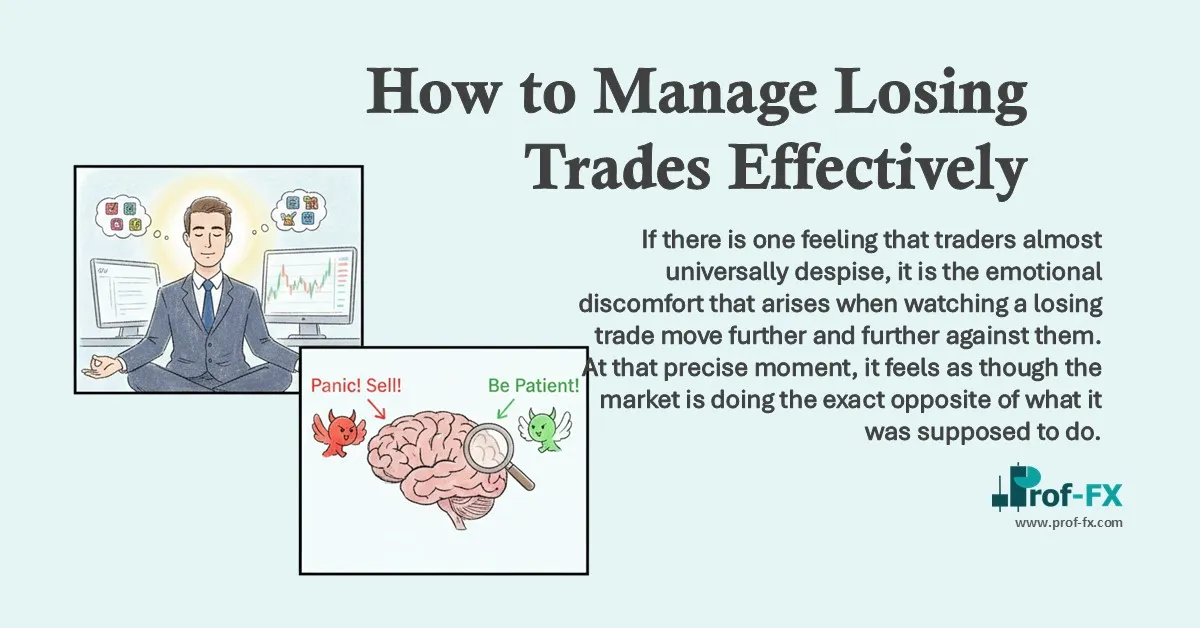
When discussing forex trading, much has already been said about trading psychology and the importance of managing emotions during both profits and losses. Yet this topic remains one of the most misunderstood aspects of trading, especially among beginner traders. Emotional reactions tend to surface most strongly during periods of uncertainty – when markets behave unexpectedly or when a trader faces a sudden gain or loss.
Imagine winning a state lottery worth over $100 million. The emotional response would likely be overwhelming—shock, excitement, and euphoria. Now consider the opposite scenario: losing an entire life’s savings in a poorly managed investment. For most individuals, the emotional impact would be devastating. While these reactions are natural in everyday life, they have no place in professional trading.
Successful participation in the financial markets—whether forex, commodities, or indices—must be approached with the same discipline, planning, and objectivity used by a small business owner. A rational entrepreneur does not panic after one or two slow business days. Instead, they revisit their business plan, assess performance, manage risk, and continue executing their strategy with long-term objectives in mind. Trading should be treated no differently.
Treat Forex Trading Like a Business, Not a Casino
Forex trading is not about emotional highs and lows. It is about probability, consistency, and execution. Each trading decision should be supported by market analysis, risk management rules, and a clearly defined trading plan. When emotions dominate decision-making, discipline disappears—and so does consistency.
A trader who reacts emotionally to every win or loss is effectively gambling. In contrast, a trader who follows a structured process understands that no single trade defines success or failure. What matters is the aggregate performance over hundreds or even thousands of trades.
Analyzing a Real Forex Trade Setup: AUD/CAD Daily Chart
Let’s examine a practical example to illustrate this mindset using a real trade setup on the AUD/CAD daily chart.
Market Structure and Trend Context
The AUD/CAD currency pair is clearly trading in an established uptrend. Price action shows a decisive breakout above the 1.0200 psychological level, which had previously acted as a resistance zone. This level is marked by a horizontal price structure that traders commonly monitor.
According to classic technical analysis principles, previous resistance often becomes future support once price breaks above it. In recent sessions, the market has respected this concept, with price retracing and finding support near the 1.0200 area—confirming the validity of the level.

At the time of analysis, AUD/CAD is trading around 1.0233. Based on this structure, a trader could reasonably plan a buy entry near 1.0225, allowing price to confirm support. A protective stop-loss might be placed at 1.0175, risking approximately 50 pips.
For trade management, a logical take-profit target could be positioned near 1.0375, aiming for a 150-pip gain. This creates a 1:3 risk-to-reward ratio, which aligns with sound money management principles widely used by professional traders and institutions.
Why This Trade Does Not Matter as Much as You Think
This setup represents one trade—nothing more. It is merely a single execution within a long trading career that may involve thousands of similar decisions. Whether this trade results in a win or a loss is irrelevant in isolation. Its outcome has no bearing on the quality of the analysis or the trader’s long-term performance.
One of the most common mistakes among new traders is placing excessive emotional weight on the current trade. They become mentally attached, watching every tick, hoping the market moves in their favor. This mindset leads to poor decisions, early exits, overtrading, and unnecessary stress.
Professional traders think differently. They understand that trading is a numbers game driven by probability. With a consistent edge, disciplined execution, and controlled risk exposure, the law of large numbers works in their favor over time.
Trade Today So You Can Trade Tomorrow
The ultimate goal of forex trading is not to win every trade—it is to stay in the game long enough for your edge to play out. This requires respecting risk, maintaining emotional neutrality, and focusing on long-term performance rather than short-term outcomes.
When you reduce the importance of any single trade, you gain clarity. You stop reacting emotionally and start executing strategically. This is what it means to trade like a business owner, not a gambler.
In simple terms, the mindset every trader must develop is this:
Trade today in a way that allows you to trade tomorrow.
That principle alone separates consistent traders from those who never make it past the learning phase.