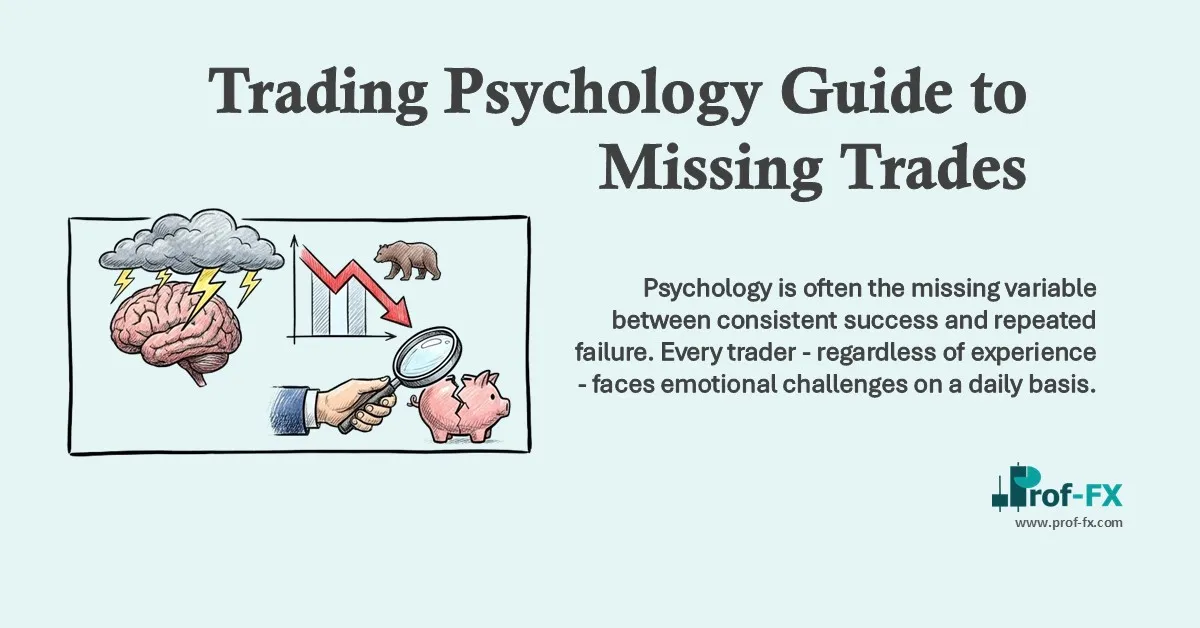
Psychology is often the missing variable between consistent success and repeated failure. Every trader – regardless of experience – faces emotional challenges on a daily basis. These emotions are unavoidable because trading decisions are made by humans, not machines. However, when emotions are left unmanaged, they can quietly erode discipline and ultimately lead to catastrophic trading results.
In this discussion, we will focus on two closely related psychological challenges: greed and the frustration that arises from missing a trade. More importantly, we will explore practical and actionable methods traders can use to prevent these emotions from negatively impacting their performance.
Why Missing a Trade Feels So Frustrating
Missing a trade is an experience nearly every trader has faced at some point. The frustration does not come from the missed opportunity itself, but from the mental fixation on unrealized profits—the pips we believe we “would have made.”
At its core, this reaction is rooted in greed, not logic. Traders often forget an essential truth:
- The trading account is still intact
- Capital has not been lost
- New opportunities will continue to emerge
When this emotional response goes unchecked, it can trigger an even more dangerous behavior—revenge trading. In an attempt to “get even” with the market, traders may:
- Enter low-quality setups
- Ignore their trading plan
- Increase leverage unnecessarily
- Take impulsive trades driven by emotion
More often than not, this chain of behavior leads to losses that far exceed the profits of the trade that was originally missed.
A Real Market Example: AUD/USD Breakout Scenario
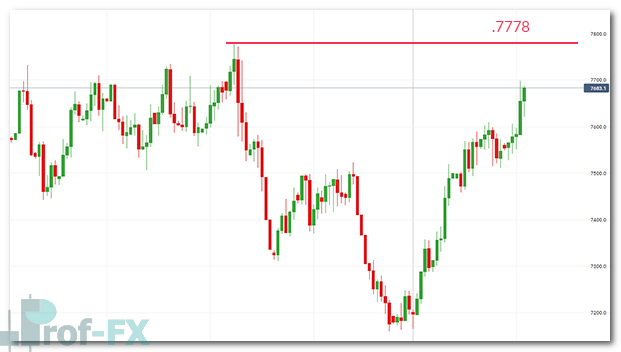
Consider the AUD/USD daily chart, where price is approaching a potential breakout above the previous high near 0.7778. When price begins to move aggressively toward new highs, traders who are not prepared may hesitate—and once price breaks out, the fear of missing out (FOMO) intensifies.
At this moment, traders generally face a choice:
- Chase price emotionally
- Or apply a predefined, disciplined solution
Below, we examine two effective methods to avoid this psychological trap altogether.
Using Price Alerts to Reduce Emotional Stress
One of the most effective tools for managing the fear of missing a trade is the use of price alerts. Price alerts allow traders to remain objective while still staying informed when the market reaches a critical level.
These alerts are especially useful when monitoring:
- Support and resistance levels
- Fibonacci retracement or extension levels
- Donchian Channels
- Previous highs or lows
Price alerts can be delivered in multiple formats, including:
- On-platform notifications
- Audio alerts
- Email or mobile messages
By using price alerts, traders remove the need to constantly watch the screen. Instead of reacting emotionally, they can calmly observe how price behaves when a key technical level is reached—allowing for rational decision-making rather than impulsive execution.
Entry Orders: Trading on Your Own Terms
Another powerful way to eliminate the fear of missing out is through the use of entry orders, particularly when trading breakout strategies.
Entry orders allow traders to define:
- The exact price at which they want to enter
- Whether they intend to buy or sell
- Stop-loss and take-profit levels in advance
This approach ensures that the trader participates in the market only if price reaches a predefined level, aligned with their trading plan. Rather than chasing price after the move has already occurred, the trader allows the market to come to them.
Creating an entry order is a straightforward process:
- Select the currency pair
- Choose buy or sell
- Define the entry price
- Use advanced settings to place stops and limits
This structure removes emotional pressure and reinforces discipline—two critical traits of successful traders.
Why Preparation Eliminates Fear
Both price alerts and entry orders serve the same purpose: they replace emotional reaction with preparation. When traders know in advance how they will respond to a specific market scenario, the fear of missing a trade loses its power.
Instead of thinking:
“I missed it—I need to act now.”
The trader thinks:
“If price reaches my level, my plan will execute.”
This mindset shift transforms what was once perceived as a psychological obstacle into a controlled trading opportunity.
Key Takeaways for Beginner Traders
Missing a trade is not a failure—it is a natural part of trading. What defines long-term success is how a trader responds emotionally to that experience.
By:
- Recognizing the role of greed
- Avoiding revenge trading
- Using price alerts
- Planning trades with entry orders
Traders can protect both their capital and their mindset. Over time, these habits build consistency, emotional resilience, and confidence, which are far more valuable than any single winning trade.
In trading, discipline is not about catching every move—it is about surviving long enough to capitalize on the right ones.