
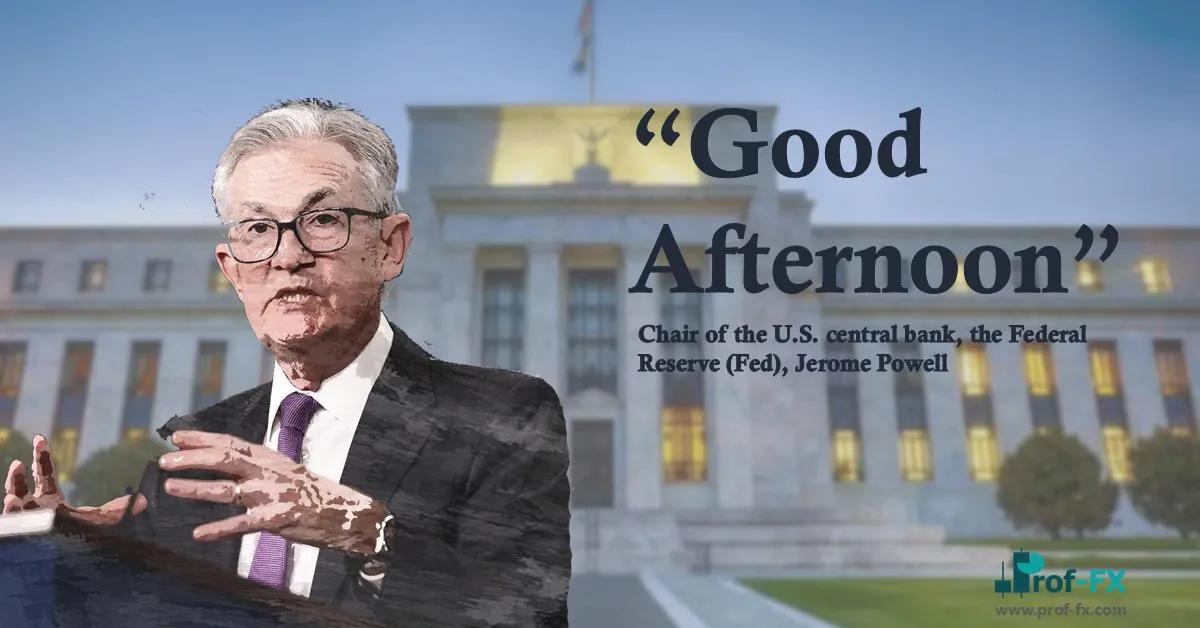
A simple “good afternoon” typically carries little weight. In global financial markets, however, that greeting can prove extraordinarily costly when it comes from the Chair of the U.S. central bank, the Federal Reserve (Fed), Jerome Powell.
On social media, Powell’s opening line has even earned a nickname: the “Most Expensive Good Afternoon.”
The label stems from Powell’s habit of beginning Fed press conferences with the understated phrase, “Good afternoon.” For most people, it is merely a polite introduction. For investors and traders, it often signals the start of heightened market volatility.
That is because Powell typically follows the greeting with guidance on the trajectory of U.S. interest rates. If his tone appears hawkish, indicating that rates may remain elevated for longer, markets tend to react swiftly. Equities come under pressure, bond yields swing sharply, the U.S. dollar strengthens, and risk-sensitive assets such as cryptocurrencies decline.
The phenomenon has since spilled into social media culture. Short-form videos frequently pair Powell’s “Good afternoon” with charts of stocks or crypto assets plunging moments later. The greeting has evolved into a financial meme, seemingly simple, yet capable of erasing billions in market value within minutes.
Courtesy: Youtube @ComLucroTrader
Rooted in Powell’s Role at the Fed
Powell has served as Fed Chair since February 2018. Since then, his statements have been closely scrutinized by global markets, particularly following meetings of the Federal Open Market Committee (FOMC).
The FOMC sets the direction of U.S. benchmark interest rates, decisions that carry global implications given the dollar’s role as the world’s primary reserve currency and a benchmark for a wide range of financial assets.
When Powell strikes a hawkish tone, signaling support for higher interest rates, markets typically respond negatively. Investors worry that elevated borrowing costs could slow economic growth, reduce liquidity, and dampen demand for riskier assets.
Conversely, a dovish tone, suggesting a more accommodative policy stance, can lift market sentiment.
This dynamic explains why every word Powell utters is dissected by market participants. Not only policy substance, but also tone, phrasing, and even opening remarks can shape expectations.
Google Searches Surge Since 2024
The rise of the “Most Expensive Good Afternoon” narrative is also reflected in Google Trends data. The term was virtually absent from global searches between 2004 and mid-2024.
Interest began to emerge in July 2024, when the search index climbed to 51. It peaked in December 2024 at 100, the highest level recorded in two decades.
This suggests the phrase gained traction only recently, not because Powell’s influence is new, but because market reactions to his remarks have increasingly been packaged into viral content.
Throughout 2025 and early 2026, search interest continued to spike intermittently, reaching 91 in December 2025 and 79 in March 2026.
The persistence of the term indicates it is more than a fleeting joke. Market participants increasingly view Powell as a figure whose words can move global markets, elevating him from central banker to a recognizable figure in trading culture.
An Eight-Minute Speech That Wiped Out Billions
One of the most striking examples of Powell’s market impact occurred during the Jackson Hole Economic Symposium on August 26, 2022.
Powell’s speech lasted just eight minutes, yet its repercussions were immediate and severe. He reiterated that the Fed would remain aggressive in raising interest rates to bring inflation back under control.
At the time, Powell warned that tighter monetary policy would impose “some pain” on households and businesses. However, he argued that such measures were necessary to restore inflation to the Fed’s 2% target.
The remarks dashed hopes that the Fed might soon pivot toward a more accommodative stance. Investors interpreted the message as confirmation that higher rates would persist for longer.
The market reaction was swift. On that Friday, Wall Street indices, including the Dow Jones Industrial Average, S&P 500, and Nasdaq Composite, fell more than 3%, marking one of the steepest daily declines since mid-June 2022.
In a matter of hours, U.S. billionaire wealth also took a significant hit. The eight-minute speech was estimated to have erased approximately $78 billion in wealth, underscoring the scale of Powell’s influence.
Ripple Effects Across Asia
The fallout from Jackson Hole extended beyond Wall Street. Asian markets also came under pressure in the following trading session.
The U.S. dollar index surged to its highest level in two decades, reaching levels last seen in September 2002. A stronger dollar weighed heavily on Asian currencies.
The Indonesian rupiah weakened by 0.49% to Rp14,888 per U.S. dollar. The Japanese yen led regional losses, falling 0.87%, followed by the Chinese yuan (down 0.68%) and the Thai baht (down 0.66%).
Equity markets across Asia also declined. Japan’s Nikkei index dropped 2.66%, Indonesia’s IHSG fell more than 1.5%, South Korea’s Kospi slid 2.13%, Singapore’s Straits Times Index lost nearly 1%, and Hong Kong’s Hang Seng Index retreated 0.8%.
Why Powell’s Words Carry Such Weight
Powell’s outsized influence stems from the Fed’s position as the world’s most important central bank.
When the Fed raises interest rates, U.S. dollar-denominated assets typically become more attractive, driving higher yields. This often triggers capital outflows from emerging markets back into the United States.
Higher rates also pressure equity markets by increasing the cost of capital, particularly weighing on growth-oriented sectors such as technology and other risk-sensitive assets.
For cryptocurrencies, tighter monetary policy is generally negative, as investors tend to reduce exposure to speculative assets during periods of constrained global liquidity.
That is why every nuance in Powell’s communication matters. Tone, word choice, and even a simple opening phrase can trigger substantial market reactions, turning an ordinary “Good afternoon” into one of the most closely watched signals in global finance.