In the world of forex trading, understanding economic indicators is crucial for making informed decisions. One of the most significant indicators is the Consumer Price Index (CPI), which provides valuable insights into inflation and its impact on currency prices. In this article, we’ll dive into what CPI is, why it matters to forex traders, how to interpret CPI data, and strategies for trading forex based on CPI releases.
What is CPI, and Why Should Forex Traders Care?
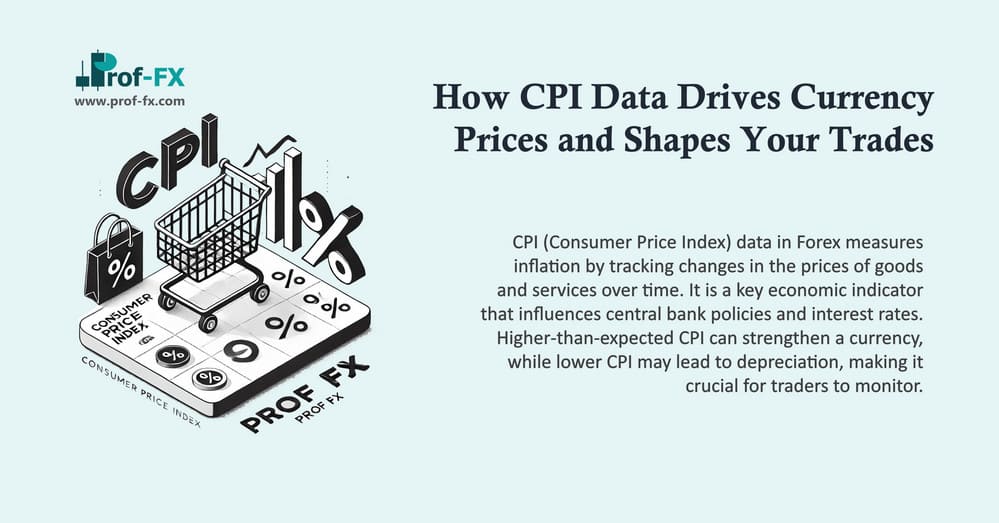
The Consumer Price Index (CPI) is a key economic indicator that measures the average change in prices over time for a basket of consumer goods and services. This basket includes essentials like food, energy, and healthcare. By tracking CPI, economists and traders can gauge the level of inflation in an economy, which directly influences a nation’s monetary policy.
For forex traders, CPI is more than just a number—it’s a window into the health of an economy. Inflation trends revealed by CPI data often lead to changes in interest rates, which are a major driver of currency strength. Higher inflation typically prompts central banks to raise interest rates, strengthening the currency. Conversely, lower inflation or deflation can lead to rate cuts, weakening the currency. Understanding CPI helps traders anticipate these movements and capitalize on potential opportunities.
When is CPI Data Released?
CPI data is released regularly, with most major economies publishing monthly reports. However, some countries, like Australia and New Zealand, release CPI data quarterly. In the United States, the Bureau of Labor Statistics has been reporting CPI monthly since 1913. Traders should keep an eye on their economic calendars to stay updated on CPI release dates, as these events often cause significant market volatility.
| Country/jurisdiction | Compiling body | Frequency of releases |
|---|---|---|
| Australia | Australian Bureau of Statistics | Quarterly |
| Canada | Statistics Canada | Monthly |
| China | National Bureau of Statistics of China | Monthly |
| Eurozone | European Central Bank | Twice monthly |
| Germany | Federal Statistical Office of Germany | Monthly, yearly |
| Italy | Istat | Monthly |
| India | Ministry for Statistics and Programme Implementation | Monthly |
| Japan | Statistics Japan | Monthly |
| UK | Monetary Policy Committee | Monthly |
| US | US Bureau of Labor Statistics | Monthly |
Why Forex Traders Should Monitor CPI Data
CPI data is a powerful tool for forex traders because it directly impacts central bank policies and currency values. Here’s how it works:
- Inflation and Interest Rates: High inflation often leads to higher interest rates, which can attract foreign investment and strengthen a currency. For example, if the U.S. CPI shows rising inflation, the Federal Reserve may raise interest rates, boosting the U.S. dollar.
- Market Volatility: CPI releases can cause sharp movements in currency pairs. Traders who anticipate these moves can profit from the resulting volatility.
- Economic Policy Insights: CPI data reflects the effectiveness of a government’s economic policies. Traders can use this information to assess the likelihood of future currency movements.
- Combining Indicators: CPI is often used alongside other indicators, such as the Producer Price Index (PPI), to get a clearer picture of inflationary pressures.
Trading Forex with CPI Data: Key Considerations
When trading forex based on CPI data, traders should consider the following:
- Market Expectations: Before a CPI release, the market often forms expectations about inflation levels. If the actual CPI data deviates from these expectations, it can lead to significant price movements. For example, if inflation is higher than expected, the currency may strengthen.
- Timing Your Trades: It’s often wise to avoid holding open positions immediately before a CPI release, as spreads can widen significantly. Instead, wait a few minutes after the release to assess the market’s reaction.
- Technical Analysis: After the CPI data is released, traders should analyze price movements in the context of key technical levels, such as support and resistance. This helps determine the strength of the move and identify potential entry or exit points.

Below is a chart showing U.S. inflation rates in 2018/19. As inflation rose in the first half of 2018, the U.S. dollar strengthened. However, when inflation fell below the 2% target later in the year, the dollar weakened. This example highlights how CPI data can influence currency trends.

Another way to interpret CPI data is by monitoring the U.S. Dollar Index, which tracks the dollar’s performance against a basket of currencies. For instance, if CPI data exceeds expectations, the index may rise, signaling dollar strength. Conversely, weaker-than-expected CPI data could lead to a decline in the index.
Conclusion: Mastering CPI for Forex Success
CPI data is an essential tool for forex traders, offering insights into inflation, interest rates, and currency movements. By understanding how to interpret CPI releases and combining this knowledge with technical analysis, traders can make more informed decisions and capitalize on market opportunities.
To stay ahead, bookmark an economic calendar to track CPI release dates and follow expert analysis on inflation trends. Additionally, consider joining webinars or reading more about how inflation impacts forex trading to deepen your understanding.